Pilgrims at IATEFL Brighton 2026, UK
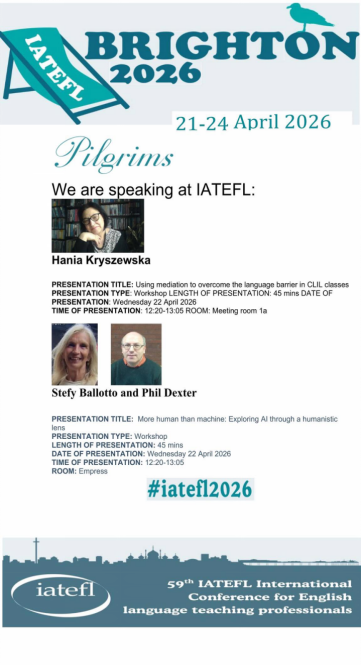
This is how Brighton greeted us…
Springtime in full bloom, blossoming cherry trees and a great IATEFL presence in town. You can’t miss the venue…


Then as you enter…. Indoors there are exhibitions, lotteries, new books and chats at the IATEFL stand…
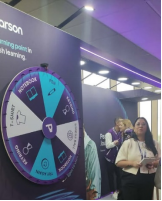
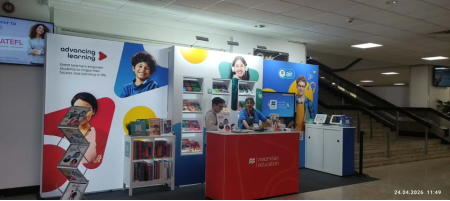
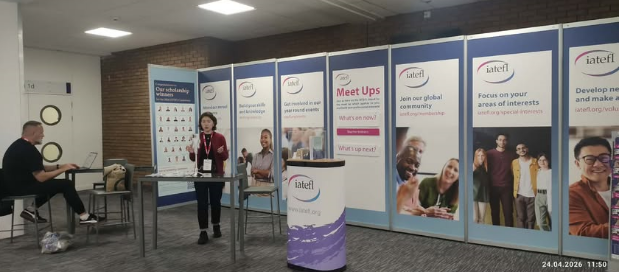
And a moment of peace as everyone is in the plenary…
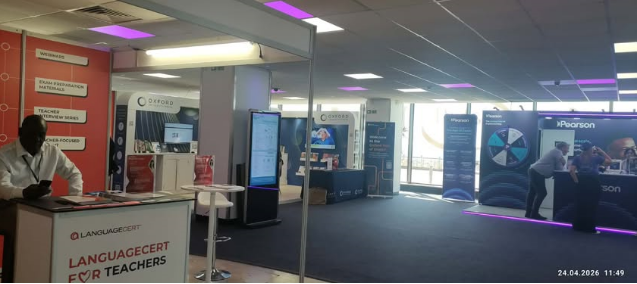
Pilgrims at Brighton IATEFL
Pilgrims was represented by Stefania Ballotto and Phil Dexter who gave a joint session and Hania Kryszewska who went solo.
Session 1: The Humanistic Lens
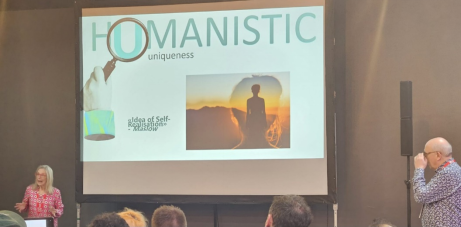
Stefania Ballotto and Phil Dexter
AI is transforming language education, and we wondered how we can engage with it meaningfully without losing sight of the human connection which is at the heart of learning.
The central theme of our joint session was showing the importance of approaching artificial intelligence through a humanistic lens. Rather than focusing solely on technological capability, we explored AI in relation to human values, ethics, culture, and social impact. We defined what each letter in the word HUMANISTIC stood for. It encouraged us to ask not only what AI can do, but also how it can be developed and applied to enhance human wellbeing and support meaningful outcomes.
A humanistic approach emphasises that AI should complement, rather than replace, human judgment, creativity, and decision-making. It also highlights the need to consider issues such as fairness, inclusion, accountability, transparency, and the broader consequences of AI for individuals and society.
We reinforced the idea that responsible AI is not defined by technical innovation alone, but by its ability to serve people, respect human dignity, and contribute positively to the communities in which it is deployed.
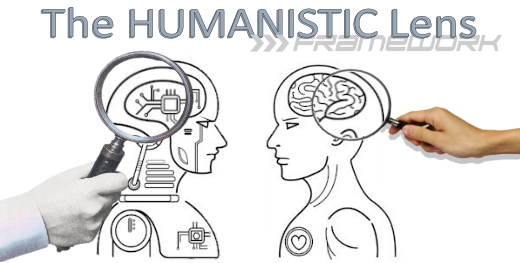
Through our humanistic lens we presented our Pilgrims view of what engaging with AI involves
H – Holistic and understanding the whole person
U – The uniqueness of the individual
M – All learners are meaning makers
A – Humans are autonomous beings and have their own agency
N – We believe strongly in Norm-ethics in the use of AI. Ethics gives us the power to choose.
I - We question if AI has a real identity or only simulates one. Learners have a real identity.
S – Reality is experienced subjectivity. We may share a similar world though experience it differently. Through human activity our subjectivity is experienced through richness and diversity.
T – In a humanistic approach trust is an essential element in relationships. We may engage with and use AI in various ways though can we really Trust it?
I – Creativitiy and Imagination are at the core of human capacity.
C – A final essential element in a humanistic approach is that of Care. Can AI really care or does it just simulate care?
In the session we also promoted our forth coming live panel discussion on
“Using AI in the Humanistic Language Classroom”
hosted by the Pilgrims Teacher Trainer Journal on 16th May.
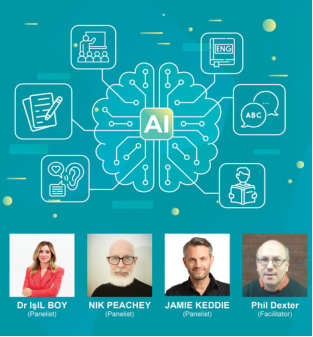
The recording of the panel discussion which explored a variety of views on the use of AI in education today can be accessed through this link https://www.youtube.com/watch?v=cSZld83zEdM
Session 2: Using mediation to overcome the language barrier in CLIL classes

Hania Kryszewska before the session. Panic?
A major obstacle in CLIL classes is the subject specific lexis and language level needed to deal with the content. CLIL texts are (quasi) authentic which over simplified compromise the content. The solution is to use intralingual and interlingual mediation activities, mediation to interact with images and visuals. Finally, mediation can structure speaking activities or roleplays. The practical CLIL ideas ( also using AI/ChatGPT) presented in the workshop, can be used in general English classes, too. During my career as a teacher and teacher trainer I have had several trends I particularly subscribed to – among them CLIL (Content and Language Integrated Learning) and Linguistic Mediation (as defined by CEFR in 2020). However, I used to keep them separate. Now I found a marriage between the two made in heaven. I wrote a 48h bespoke course for future employees in the renewable energy sector. The participants are to be B1+ and upwards levels but can be B1 or even lower.
The activities are to be based exclusively on authentic materials introducing specialised language and RE specific topics. In the writing process I discovered that the greatest problem CLIL courses face is language proficiency of the learners, using the mother tongue, making the content accessible without compromising its complexity, complex vocabulary etc can be overcome by introducing various aspects of mediation – content, cognitive, intralingual, interlingual, transcoding, cultural and social mediation. This workshop is highly practical showing how to create content-based activities using mediation and making use of various online tools, including AI/ChatGPT to adapt or create materials. The latter make life much easier and speed up the lesson planning which can be very time consuming in designing CLIL courses. The audience can take the ideas home and use them to prepare activities based on authentic materials of their choice not only for CLIL classes.
Other sessions
The programme was jam packed with excellent sessions and I harvested many articles which will be published in the next issues of HLT. Just to whet your appetites and to make you want to attend future IATEFL conferences…
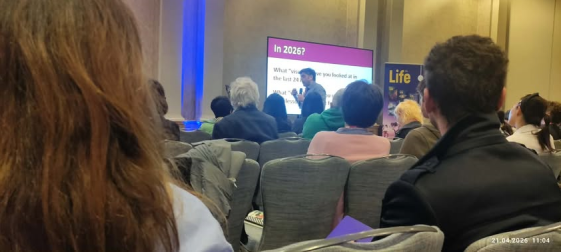
John Hughes talking about visuals
The session explored how teachers can maintain learner motivation in an era when AI tools can perform many traditional language-learning tasks. It focused on designing authentic, purposeful classroom activities that encourage students to communicate, collaborate, and solve real-world problems rather than simply complete exercises.
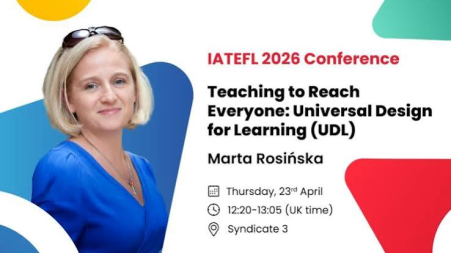
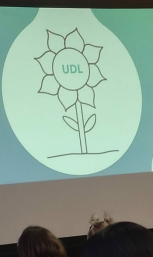
Marta Rosińska introducing UDL
Universal Design for Learning (UDL) is an educational framework designed to remove barriers to learning and give all students an equal opportunity to succeed. Rather than using a "one-size-fits-all" approach, it builds in flexibility so that methods, materials, and assessments can be adapted to fit individual strengths and needs.
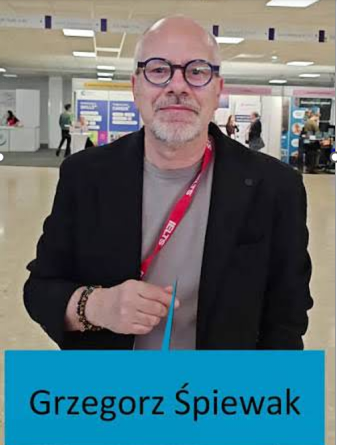
At the IATEFL YLTSIG Showcase in Brighton, his presentation challenged the widespread belief that success in language learning depends primarily on talent. Instead, he argued that all learners can develop language ability when they are given sufficient opportunities to use the language meaningfully.
A key example he shared was a project in Poland in which homeroom teachers with approximately B1-level English incorporated small amounts of English into their everyday classroom routines. The project suggested that frequent, authentic exposure and use can significantly enhance learners' language development, even when teachers are not language specialists.
The central messages of his session included:
- Language learning is driven more by opportunity and participation than by innate talent.
- Regular, low-stakes exposure to English throughout the school day can be highly effective.
- Non-specialist teachers can successfully support language development by integrating English into daily classroom interactions.
- Creating conditions for learner agency and meaningful communication is more important than waiting for "ideal" proficiency.
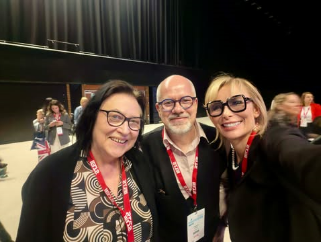
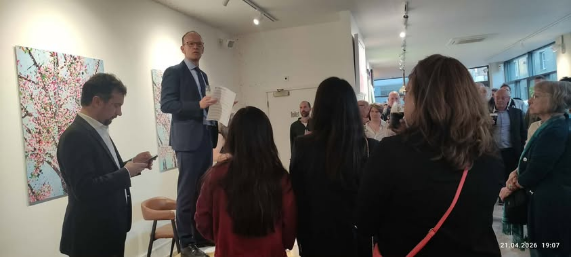
And finally celebrating and meeting firends


SEE YOU NEXT YEAR IN BIRMINGHAM
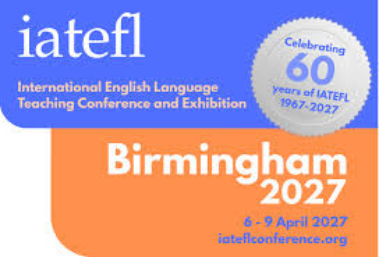
The 2027 IATEFL International Conference and Exhibition will be held in the lovely city of Birmingham, in the heart of England.
This international festival of the English language teaching profession will run from Tuesday 6 April to Friday 9 April 2027, with Pre-Conference Events being held on Monday 5 April.
The IATEFL Conference is a 4 day celebration of the English language teaching profession with several thousand English language teaching professionals, over 600 academic sessions, an exhibition of all that's new in the world of English language teaching, and a busy social programme of fun evening events and opportunities to network and be part of the global community of ELT professionals. The academic programme includes headline plenaries, presentations, workshops, panel discussions, enlightening talks and poster presentations.
Coming soon! Please check the Pilgrims in Teacher Training courses in 2027 at Pilgrims website.
Pilgrims News
Phil Dexter, Pilgrims Teacher Training coordinator and editor the Teacher Trainer JournalPilgrims Teacher Training Conference – An Update
Pilgrims at IATEFL Brighton 2026, UK