Short Book Reviews
Hanna Kryszewska is a teacher, teacher trainer, trainer of trainers. She was a senior lecturer at the University of Gdańsk, Poland. She is co-author of resource books: Learner Based Teaching, OUP, Towards Teaching, Heinemann, The Standby Book, CUP, Language Activities for Teenagers, CUP, The Company Words Keep, DELTA Publishing, and a course book series for secondary schools: ForMat, Macmillan. She is also co-author of a video-based teacher training course: Observing English Lessons, and online course for Orient Black Swan on 21st Century Skills and Teaching the whole person: Humanising language teaching. Hania is a Pilgrims trainer, OTA trainer and editor of HLT Magazine.
Email: hania.kryszewska@pilgrimsteachertrainig.eu
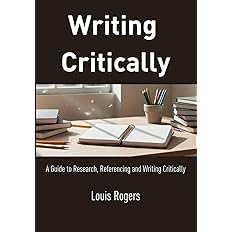
Writing Critically: A Guide to Research, Referencing and Writing Critically (Academic English). L. Rogers. (2025). Self-published. ISBN-13- 979-8312177992, pp.141. There are quite many books which introduces the students to writing critically – which involves researching, referencing and writing critically. But there are never enough materials in this category and few which successfully combine these three areas. The addressees are obviously tertiary level learners but in my experience secondary learners would benefit from working with a selection of such materials, as when they leave school and go to university they need to be prepared for the eventuality that they will write their first academic paper in English. Then it might be a bit too late or quite tricky to start learning critical writing in general, noy just in English. Overall, I believe that at the secondary level in many educational systems we spend too much time on writing stories, argumentative or opinion essays, and too little on genres the students will find useful in tertiary education in courses delivered in English.
The book is divided into the following sections which are the best characteristics of the book: critical reading, analysing essay questions, writing introductions, writing thesis statement, paragraph structure, topic sentences and their connection to the thesis statement, engaging with counterarguments, using sources, writing effective conclusion, teacher feedback and marking criteria, APA referencing overview, MLA referencing overview, Chicago referencing overview, Harvard referencing overview, and phrase bank, at the end. As you can see there are a lot of topics covered, but on second thoughts I would say, there are a lot of topics signalled and briefly outlined. The chapters or sections are not very ‘dense’, often listing features in bullet points, and some practice exercises. All this makes it a great introduction to this very complicated area of academic and critical writing for the academia. The blurb says that the book is a ‘must-have resource for anyone aiming to improve their academic writing skills’ – would say it is a must-have for anyone who wants to launch into academic writing.
You can access a sample of the book here.
You can a read a review of Academic Vocabulary and Grammar. Essential language for academic writing by L. Rogers here.
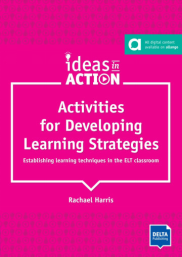
Activities for Developing Learning Strategies. Establishing learning techniques in the ELT classroom. R. Harris. (2023). DELTA Publishing. ISBN 9783125017498 , pp.128. The book is a practical and insightful resource for language teachers seeking to foster greater learner autonomy and success in their classrooms. The book successfully bridges theory and practice by emphasizing the importance of explicit learning strategies and demonstrating how these strategies contribute to both the learning process and student motivation. One of its greatest strengths is its accessibility. The author presents clear explanations of learning strategy theory before moving into actionable guidance, offering teachers a range of micro-strategies that can be seamlessly integrated into lesson planning and classroom delivery. With more than 30 engaging activities, the book provides a rich collection of ready-to-use materials that encourage students to become more reflective, independent, and effective language learners. (The activities are presented in six groups: goals and organisation, developing a learner mindset, overcoming challenges, strategies for skills, strategies for grammar and vocabulary, and revision and exam preparation.) The inclusion of practical tools, downloadable worksheets, and suggestions for adapting activities to online environments makes the book particularly relevant for contemporary teaching contexts. Additionally, the ideas for differentiation and extension ensure that the activities can be tailored to diverse classrooms and a variety of teaching scenarios.
Overall, Ideas in Action: Activities for Developing Learning Strategies is a valuable addition to any language teacher’s professional library. Its combination of sound pedagogical foundations and practical classroom applications makes it an excellent resource for educators who wish to empower their students with lifelong learning skills.
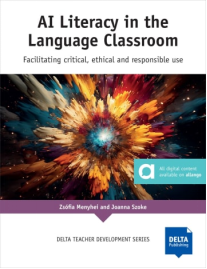
AI Literacy in the Language Classroom. Facilitating critical, ethical and responsible use. Z. Menyhei and J. Szoke (20025). ISBN 9783125017917, pp. 117. The rapid emergence of generative artificial intelligence has fundamentally altered the landscape of language education. Within a remarkably short period, language teachers have been confronted with questions concerning academic integrity, assessment, learner autonomy, and the ethical implications of AI-assisted learning. Against this backdrop, AI Literacy in the Language Classroom by Zsófia Menyhei and Joanna Szoke arrives as a timely and highly practical contribution to teacher development literature.
Rather than presenting yet another guide to the latest AI applications, Menyhei and Szoke make a deliberate and commendable choice: they focus on AI literacy as a transferable competency. This distinction is perhaps the book's greatest strength. As AI tools continue to evolve at an unprecedented pace, resources tied to specific platforms risk becoming obsolete almost immediately. By centring their discussion on critical engagement, ethical awareness, and pedagogical adaptability, the authors provide language teachers with a framework that is likely to remain relevant long after today's tools have been superseded.
The book is organized into three clearly structured parts. Part A introduces readers to the foundations of artificial intelligence, explaining different types of AI and their applications in everyday life. Importantly, the authors avoid unnecessary technical jargon while still providing sufficient background knowledge to help teachers feel confident discussing AI with their learners. The inclusion of established AI literacy frameworks gives educators a conceptual lens through which to approach the subject, reflecting broader developments in the field, where researchers increasingly emphasize critical and ethical dimensions of AI literacy rather than mere technical proficiency.
Part B constitutes the core of the volume and offers an extensive collection of classroom activities. Covering topics such as introductory AI use, risk awareness, creativity, and personalized learning, these activities are intentionally designed to be adaptable across proficiency levels, teaching contexts, and even languages. This flexibility significantly enhances the book's value, particularly for teachers working outside mainstream English-language contexts. The activities encourage learners not only to use AI but also to interrogate its outputs, recognize its limitations, and reflect on its broader societal implications. Such an approach aligns with emerging evidence suggesting that students benefit most from explicit instruction in evaluating and regulating their interactions with AI systems.
Part C addresses a topic often neglected in practitioner-oriented publications: teacher apprehension. Many educators remain uncertain about the place of AI in language education, viewing it simultaneously as an opportunity and a threat. The reflective tasks included in this section acknowledge these concerns and encourage teachers to develop their own informed positions regarding AI integration. Particularly noteworthy is the authors' transparency regarding their own writing process and their discussion of responsible AI use. In doing so, they model the very principles of ethical engagement that the book advocates.
The book's brevity—117 pages—is both an advantage and a limitation. On the one hand, it makes the text highly accessible and manageable for busy practitioners. On the other, readers seeking a more substantial engagement with the growing body of AI literacy research may find the theoretical discussions somewhat concise. Given the rapidly expanding scholarship on AI literacy in education, future editions might benefit from a more extensive treatment of international policy developments, assessment practices, and empirical studies of AI implementation in language classrooms.
Nevertheless, these are minor reservations. Menyhei and Szoke have succeeded in producing a practical, thoughtful, and forward-looking resource at a time when educators urgently need guidance. Their emphasis on cultivating critical, ethical, and responsible users of AI reflects a broader shift in educational discourse: away from asking whether AI belongs in the classroom and toward considering how it can be integrated meaningfully and responsibly.
Ultimately, AI Literacy in the Language Classroom deserves a place on the bookshelf of every language teacher navigating the challenges of the AI era. It offers not only activities and frameworks but also reassurance: teachers do not need to become AI experts to teach AI literacy effectively. They need curiosity, criticality, and a willingness to learn alongside their students—qualities this book successfully inspires.
Coming soon! Please check the Pilgrims in Teacher Training courses in 2027 at Pilgrims website
The Wemsday Style Guide: A reference for English language and modern language materials writers
John Hughes, UK;Katherine Bilsborough, UKShort Book Reviews
Hanna Kryszewska, Poland