- Home
- Various Articles - Social and Emotional Learning
- Practical Application of Culturally Responsive Teaching Practices and Universal Design for Learning to Promote Inclusivity
Practical Application of Culturally Responsive Teaching Practices and Universal Design for Learning to Promote Inclusivity
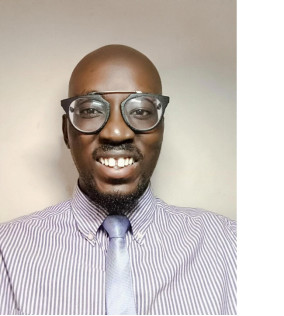
Tichakunda Gabi is from from Harare, Zimbabwe. He is currently enrolled at the American College of Education where he is studying a M.Ed. in Teaching English Learners. He has been teaching English as Foreign Language (EFL) for over 10 years. His experience ranges from teaching children and adults online, as well as in China and now here in Japan. He has a background in hospitality management, marketing, and entrepreneurship. As a passionate educator, he believes one should never stop learning, which is a key element of his culture and upbringing. Email: tichakunda.gabi52@gmail.com
Abstract
This article delves into the integration of multiculturalism, culturally responsive teaching practices (CRT), and Universal Design for Learning (UDL) within the classroom to promote inclusivity and academic success. The article emphasizes the importance of designing a curriculum that not only reflects diverse cultures but also celebrates the individual uniqueness of each student. It discusses how teachers can simultaneously implement CRT practices and UDL principles through craft making, translanguaging, the Language Experience Approach (LEA), and the incorporation of culturally authentic, multilingual literature. These strategies encourage active learning, engagement, and empowerment of students through leveraging their cultural assets and linguistic diversity.
Introduction
Multiculturalism is an ideology based on recognizing, celebrating, and incorporating diverse cultural backgrounds within the classroom and in our daily lives. Communities and schools are becoming increasingly diverse as individuals migrate to and work in countries different from their country of origin. In the US, approximately 5 million English learners enter school without English as their primary or home language (Steele et al., 2024). The focus of multiculturalism in the classroom is to create a curriculum that sufficiently represents multiple cultures and aims for the success of all students by respecting their identities. Thus, with multicultural education, all students have a chance to succeed and equal opportunities are provided to all regardless of their cultural background (Ladson-Billings, 1994).
Culturally responsive teaching and universal design for learning
Cultural responsiveness, however, goes a step further than multiculturalism to incorporate the student voice in an innovative manner. It does this by adapting teaching materials and practices according to the diverse needs of students, allowing them to engage meaningfully with the content. Culturally responsive teaching (CRT) practices utilize culture and background knowledge, frames of reference, and learning styles of ethnically diverse students to make their learning experience more relevant to them and aligned with their needs (Takemae et al., 2022). These students' differences are strengths and assets rather than weaknesses. This approach not only empowers students to be active participants in their learning journey but also inspires them to appreciate diverse cultural viewpoints (Thomas, 2024). Universal Design of Learning (UDL) is an effective tool to implement CRT practices. The basis for UDL is to strive to understand the diverse learning styles of students and empower them to take charge of their learning. It achieves this by providing students with multiple means of engagement, representation, action, and expression (Takemae et al., 2022).
Practical applications in the classroom
One way I combine CRT practices and implement the principles of UDL is through the crafts that students create in the classroom. Creating crafts allows students to learn about diverse cultures and explore their own cultures. The crafts are displayed in the classroom and used as points for discussions on diverse cultures. Each week, students learn about the cultural background before creating the corresponding craft. For example, in one lesson, the students learned about Ndebele artwork and how the symbols express the tribe's culture, values, and identity. The Ndebele people are an ethnic group in Zimbabwe and South Africa. They use geometric patterns and natural pigments in their art (Kruger National Park, 2025).
In the next lesson, we discussed other cultures that use geometric art patterns. These include ancient Greek, Egyptian, Hindu, and Islamic cultures (Dada Prints, 2023). Students then had a choice of which art pattern they wanted to incorporate in their craft. This concept provides students with multiple means of action and expression, whereby their crafts demonstrate their understanding of the concepts in their way. They also had a choice between working individually or collaboratively. Working collaboratively helps foster respect for diverse opinions, while giving students the choice to work independently acknowledges different learning styles and the student voice, thus implementing the UDL principle of multiple means of engagement (Takemae et al., 2022).
Making students active participants in the learning process increases their internal motivation (Wang, 2018). Another CRT practice I use in the classroom to promote active learning and demonstrate to students that their cultural background has value in their learning is the implementation of the Language Experience Approach (LEA). This teaching method connects prior knowledge and experiences with the development of reading and writing skills. This approach aligns with the UDL principle of providing students with multiple means of representation by connecting prior knowledge to their new learning experiences (CAST, 2025).
As students tap into their prior knowledge and experiences, they are empowered to use their own words as a basis for literacy (Roberts, 2023). Students can share their stories using a digital story creation application called Book Creator. This user-friendly application enables students to transcribe their stories. These stories become the reading material in the lesson. It supports multiple means of expression through features that allow users to draw, add images, text, audio, and video clips as they create their books (Book Creator, 2011-2025).
Promoting multilingualism and cultural assets
Lastly, promoting multilingualism in the classroom is crucial for fostering an inclusive learning environment through the introduction of culturally authentic literature, classroom materials, and flashcards. Students can engage with literature that utilizes both English and their heritage language. A weekly book reading, discussion of themes, and the creation a chart detailing similarities and differences in relation to the students' backgrounds is conducted. Vooks is an excellent source of read-aloud, wonderfully animated books for children (Vooks, 2025). Another book source with a wide range of digital books is Oxford Owl (OxfordOWL, 2025).
Research by Ulum (2024) highlights the importance of encouraging translanguaging in the classroom and emphasizes its significant role in fostering an inclusive learning environment. Students will be free to use both English and their heritage languages in these discussions. Language is a cultural asset and an essential part of one's identity. It is essential to utilize learners' entire linguistic repertoire to promote more effective and meaningful language development. The heritage language acts as a bridge to create a lasting connection and better vocabulary retention of the second language (Nurjanah, 2024).
Conclusion
By integrating CRT practices and UDL principles, we can create an inclusive classroom environment that respects and values students' diverse backgrounds and experiences. This combination not only caters to the diverse needs of students but also empowers them to take charge of their learning. These strategies contribute to creating a supportive learning environment where students have multiple means of engagement, representation, action, and expression, thereby enhancing their learning experience.
References
Book Creator. (2011-2025). Love learning. https://bookcreator.com/
CAST. (2025). The UDL guidelines. https://udlguidelines.cast.org/
Dada Prints. (2023, August 6). Geometric art & architecture history | Geometric art & design. https://dadaprints.com/blogs/news/geometric-art-history#:~:text=Geometric%20Mosaic%20Fretwork%20Mitla%20ruins,quite%20incredible%20to%20look%20at.
Oxford Owl (2025) OxfordOWL. https://www.oxfordowl.co.uk/
Ladson-Billings, G. (1994). What we can learn from multicultural education research. Educational leadership, 51(8), 22–26. https://research.ebsco.com/c/36ffkw/viewer/pdf/qy5tpnvjrr
Nurjanah, A. (2024). Bridging languages: Translanguaging and vocabulary development in English language education. Journal Hawalah, 3(2), 82-88. https://doi.org/ 10.57096/hawalah. v3i2.63
Roberts, S. K. (2023). Making reading meaningful: Sylvia Ashton-Warner and the Language experience approach. YC: Young Children, 78 (1), 84-88. https://research.ebsco.com/c/36ffkw/viewer/html/ok4t5fesh5
Kruger National Park. (2025). Ndebele. https://www.krugerpark.co.za/africa_ndebele.html#:~:text=The%20back%20and%20side%20walls,front%20walls%20of%20the%20house.
Steele, J. L., Wartzinger-Tharp, J., Slater, R. O., Roberts-Aguirre, G., & Bowman, K. (2024). Achievement effects of dual language immersion in one-way and two-way programs: Evidence from a statewide expansion. B.E. Journal of Economic Analysis & Policy. 24 (4) 1101–1138. https://doi.org/10.1515/bejeap-2022-0241
Takemae, N., Nicoll-Senft, J., & Tyler, R.M. (2022). Addressing issues of equity using the cross-pollination of universal design for learning and culturally responsive teaching. PDS Partners: Bridging Research to Practice, 17(1), 9–15. https://files.eric.ed.gov/fulltext/EJ1347749.pdf
Thomas, C.A. (2024). District certified culturally responsive elementary teachers and their mathematics teaching practices. Journal of Urban Mathematics Education, 17(1), 10–47. https://research.ebsco.com/c/36ffkw/viewer/pdf/7zsqdakpcr
Ulum, O.G. (2024). Breaking down linguistic barriers: The radical impact of translanguaging on pre-service EFL teachers' perspectives in Turkey. PLoS ONE, 19 (12), 1–22. https://dx.doi.org/10.1371/journal.pone.0315982
Vooks. (2025). Animated read-aloud books for kids. https://www.vooks.com/
Wang, L. (2020). Application of affective filter hypothesis in junior English vocabulary teaching. Journal of Language Teaching & Research, 11(6), 983–987. https://doi.org/10.17507/jltr.1106.16
Please check the Pilgrims in Segovia Teacher Training courses 2026 at Pilgrims website.
Developing Intercultural Communicative Competence in Early Childhood through Telecollaboration and Storytelling: A Turkey–Nigeria Qualitative Action Research Study
Seda Hava Ak and Henry Dakat, GermanyReclaiming the Human in Higher Education: A Call for Social and Emotional Learning (SEL) in the Age of AI
Jokha Al Hosni, OmanPractical Application of Culturally Responsive Teaching Practices and Universal Design for Learning to Promote Inclusivity
Tichakunda Gabi, ZimbabweFostering Teacher–Student Rapport for Sustainable Benefits: Student Insights
Lara Arafat, Oman