Eco-issues in the ELT Classroom: Addressing Agenda 2030
Hanna (Hania) Kryszewska is a teacher, teacher trainer, trainer of trainers. Once a senior lecturer at the University of Gdańsk, Poland, now she is a free lancer. She is co-author of resource books: Learner Based Teaching, OUP, Towards Teaching, Heinemann, The Standby Book, CUP, Language Activities for Teenagers, CUP, The Company Words Keep, DELTA Publishing, and a course book series for secondary schools: ForMat, Macmillan. She is also co-author of a video-based teacher training course: Observing English Lessons, and online courses for Orient Black Swan on 21st Century Skills and Teaching the Whole Person: Humanising Language Teaching. Hania is a Pilgrims trainer, OTA trainer and editor of HLT Magazine.
Email: hania.kryszewska@pilgrimsteachertrainig.eu
Note
This article was published in TESOL Greece Newsletter, and is based on my workshop at TESOL Athens Conference, 2005.
Introduction and background
25th September 2015 was a very important day for addressing sustainability. On this day at a special EU summit, world leaders unanimously adopted historic sustainable development goals as the General Assembly shaped the global outlook for prosperity and peace.
Then the 17 Sustainable Development Goals (SDGs) of the 2030 Agenda for Sustainable Development were adopted by world leaders during a historic UN Summit and on January 1st 2016 it officially came into force.
The World Economic Forum held the Sustainable Development Impact Summit in January 2017, and it focused on the Sustainable Development Goals (SDGs), gathering various parties and decision-making groups to discuss and promote initiatives related to the 2030 Agenda.
This infographic sums up the goals.
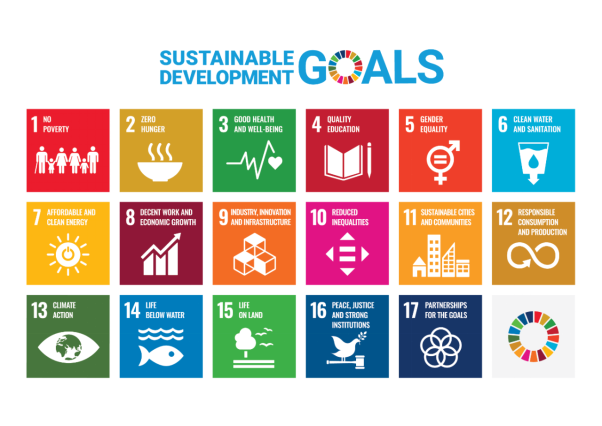
Source: https://www.gov.pl/web/polishaid/sustainable-development-goals - (last accessed 20.04.2025)
Language teachers very quickly realized its importance and started implementing the goals into their syllabuses and project. A very good example is Integrating global issues in the creative English language classroom ed. Alan Maley and Nik Peachey, published by the British Council in 2017. In the introduction Alan Maley talks about the importance of implementing the GDGs into our teaching. He puts it into a dialogue:
Teacher
What do you do?
I’m a teacher.
What do you teach?
People.
What do you teach them?
English.
You mean grammar, verbs, nouns, pronunciation,
conjugation, articles and particles, negatives and
interrogatives …?
That too.
What do you mean, ‘that too’?
Well, I also try to teach them how to think, and feel –
show them inspiration, aspiration, cooperation,
participation, consolation, innovation,
… help them think about globalization, exploitation,
confrontation, incarceration, discrimination,
degradation, subjugation,
…how inequality brings poverty, how intolerance brings
violence, how need is denied by greed, how –isms
become prisons, how thinking and feeling can bring
about healing.
Well, I don’t know about that.
Maybe you should stick to language,
forget about anguish.
You can’t change the world.
But if I did that, I’d be a cheater, not a teacher.
Alan Maley
Source: https://www.teachingenglish.org.uk/sites/teacheng/files/PUB_29200_Creativity_UN_SDG_v4S_WEB.pdf - (last accessed 20.04.2025)
The aim of the book (which is free to download) offers innovative ideas for language teaching while raising awareness of the United Nations Sustainable Development Goals. It mainly focuses on the environment, so goals 13-15. In the words of the British Council experts:
This publication has a twofold aim – to help students learn a language creatively whilst at the same time raising awareness of the United Nations Sustainable Development Goals through bringing together a range of innovative ideas for teaching creatively and addressing these key issues. The activities include enabling students to think creatively about sustainable food and food supplies, creating energy which does not harm the environment, and collaborating with other students globally to diminish the digital divide.
Source: https://www.teachingenglish.org.uk/publications/resource-books/integrating-global-issues-creative-english-language-classroom - (last accessed 20.04.2025)
The publication appeared early 2017, so very soon after the UN historic summits. There was great interest in the publication and many well known TEFLers contributed to the collection. The interest was so great that not all of them could be included. But soon the editors found a solution and offered Humanising Language Teaching (HLTmag) ( www.hltmag.co.uk ) to publish the overspill. You can find these 6 articles in http://old.hltmag.co.uk/jun17/index.htm - (last accessed 20.04.2025).

What teachers may find overpowering is the fact that there are so many goals, almost too many to address. I would say this is not a problem as the goals can be grouped and many sources do it in their own ways not only for convenience but also for more impact, for example:
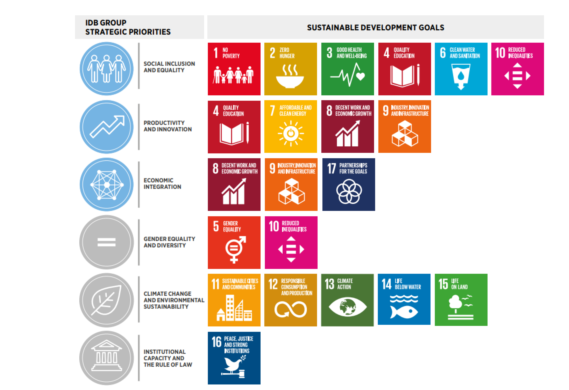
Source: https://publications.iadb.org/en/idb-group-strategic-priorities-and-sustainable-development-goals - (last accessed 20.04.2025)
https://abundantearthfoundation.org/categorize-sdgs-by-groups-for-more-impact/ - (last accessed 20.04.2025)
In 2004 HLTmag started a new column devoted to sustainable goals - to be precise ECO issues (more columns on other SGDs are on their way). In the April 2004 issue Alan Maley opened the new column https://www.hltmag.co.uk/apr24/global-ecological-collapse with his article Global Ecological Collapse and the Power of Teachers (last accessed 20.04.2025). Next followed the June issue with Pilgrims eco flyer and plans for a SGD teacher training course at Pilgrims (now situated in Segovia) https://www.hltmag.co.uk/jun24/attachments/download.asp?file=1275&type=pdf - (last accessed 20.04.2025). The August 2024 issue https://www.hltmag.co.uk/aug24/ - (last accessed 20.04.2025) contains 12 contributions devoted to eco issues. Now in each issue of HLTmag you can read articles on ECO issues and authors contribute articles, lesson ideas, project ideas, poems, stories, book reviews and book previews.
Sample activities
In the second part of the article, I will present sample activities how to implement ECO issues in the ELT class with secondary learners, but the ideas are adaptable to lower levels and younger students.
Dispelling myths
1 Ask students to answer in pairs: Why do glaciers melt? Why do coral reefs die?
2 Pool ideas with the whole class.
3 Ask them to research.
4 Make sure they eventually get that it is not only global warming:
a
Glaciers around the world are more exposed to particulate matter now than they ever were before the industrial revolution. Covering them with a dark material changes the albedo. The darker the surface, the more of the Sun's light is absorbed by the glacier, warming it and melting it.
b
Coral reefs are threatened by both local and global threats, including overfishing; sediment, nutrient and marine pollution; and increasing ocean warming and acidification. Overfishing is the most pervasive local threat to coral reefs.
Some more lesson ideas on the subject to be found here:
https://www.metlink.org/experiment/particulate-matter-ice-albedo-and-melting-worksheet/
https://sanctuaries.noaa.gov/education/teachers/coral-reef/lesson-plans.html - (last accessed 20.04.2025)
5 Ask them to research some more misconceptions we have about the environment. e.g. global warming means milder winters, or global warming kills polar bears.
Do you eat fish?
1 Collect photos on fish farming for example:
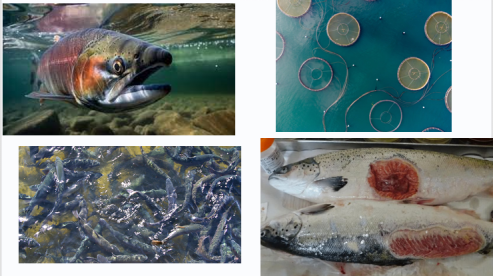
Various sources on the web.
2 Ask the students to interpret images.
3 Then ask them to do the gap-fill exercise. Note they can put in each gap as many words as they wish.
Fish are the most …………………on Earth. Up to ………………… individuals are ……… every year. They are able to …….., ……… and other ……… throughout their lives. Despite this, fish receive ……… and are either ……………………. or ………………….. .
Source: https://www.ciwf.eu/farm-animals/fish/ (last accessed 20.04.2025)
4 Check against the original text
Fish are the most utilised animals on Earth. Up to three trillion individuals are killed for food every year. They are able to feel pain, pleasure and other emotions throughout their lives. Despite this, fish receive very little legal protection and are either farmed in terrible conditions or caught using extremely cruel methods.
Source: Fish, their complexities and how they are farmed for food | Compassion in World Farming - (last accessed 20.04.2025)
5 Give the following phrases:
aquatic vertebrates excellent taste, smell and colour vision
detect the motion of currents, nearby fish and prey
feel pain experience a range of emotions more intelligent than … crowded
long-term memories complex social structures problem solving abilities antibiotics
some have been seen using tools over-fishing enclosures
aquaculture is growing rapidly farmed intensively
1970 around 5 per cent … today between 40-120 billion
6 They work in pairs and expand the text in 4 using the ideas in 5.
In the news
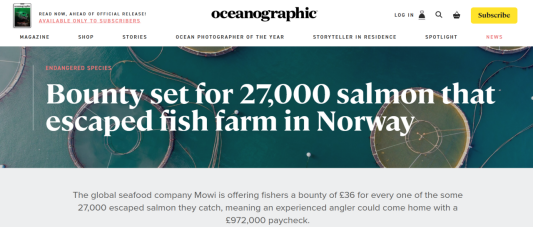
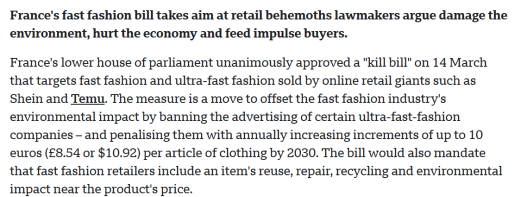
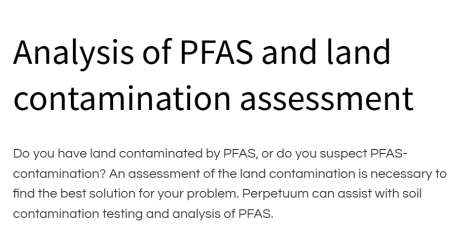
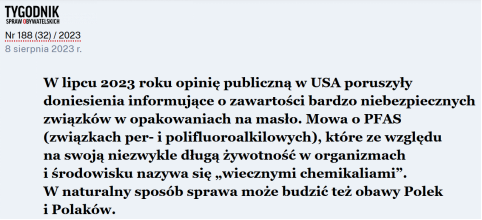
1 The students go online and find some up to date eco news. They have 5 minutes on their phones in class. If they cannot use phones, then this is homework.
2 They can look up local mother tongue sources or English language sources.
Note: The former may be closer to their experience, and they will mediate content between languages. For your sake I am using mostly the English examples my students found.
3 Then they report their findings to the whole class, e.g.
a
b
c in English
c in Polish
d
Note: If some students have the same or similar news item they can do a joint presentation.
Show and tell
1 In this project students explore their environment for ECO issues.
2 They take photographs of pollution and ‘ECO sins’ in their environment.
3 They bring them into class.
4 Students present their photos and discuss what they could do about each problem.
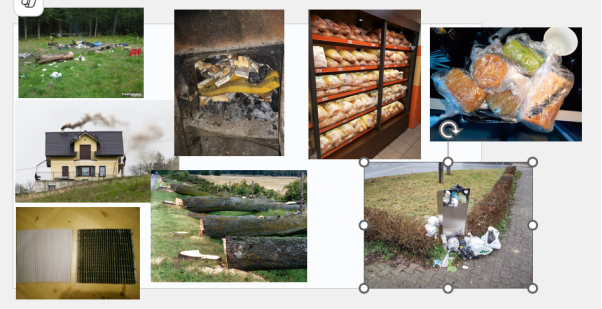
A collage of sample photos from the Tatra mountains region, Poland.
My beliefs
1 Students work alone and decide how they feel about the following statements:
- The damage is done, and our environmental situation is beyond hope of repair.
- Climate change and other environmental challenges are not affecting me personally.
- I live in the city. “Nature” and natural ecosystems are “out there” in the country or wilderness, so protecting nature isn’t relevant to me.
- I know there is a crisis, but I can’t make a difference in my ordinary life.
- I would personally love to pursue a career as an environmental educator — but people don’t really get paid to do this, do they?
2 Work in groups of 5 or more, and discuss your views.
3 Go to https://leadthechange.bard.edu/blog/5-myths-about-the-environment-that-explain-the-need-for-environmental-educators and each person in the group reads up on a different area.
4 Feed across what you have found.
5 Discuss the conclusions with the whole class. Design a poster that sums up your ideas.
Source: https://leadthechange.bard.edu/blog/5-myths-about-the-environment-that-explain-the-need-for-environmental-educators - (last accessed 20.04.2025)
Conclusions
The activities above show the various benefits of implementing SGDs as they are so multifaceted. Agenda 2030 / SGDs in English language lessons can have many angles like:
- Making Thinking Visible
- Mediation
- Genuine communication
- Citizenship
- Critical thinking
- CLIL
- Creating communities of learners
- Empathy
- Sustainability
- Leadership
- Projects
- Visual literacy
- Learner-based teaching
If you reflect on the activities presented in this article, you will spot a number of these angles easily. I hope they have encouraged you to take some of the SGDs on board. More ideas are soon to come in HLTmag. If you have ideas you would like to share, write to us and we will publish them in the ECO issues section.
Please check the Pilgrims in Segovia Teacher Training courses 2026 at Pilgrims website.
Eco-issues in the ELT Classroom: Addressing Agenda 2030
Hanna Kryszewska, PolandClimate Psychology Alliance: Useful Links and Resources