- Home
- Various Articles - AI
- Exploring Secondary English Teachers’ Choices of AI Tools for Teaching Reading to High Schoolers and Their Challenges
Exploring Secondary English Teachers’ Choices of AI Tools for Teaching Reading to High Schoolers and Their Challenges
Narendra Setia Herawarman is an English teacher at a private elementary school in Salatiga, Indonesia. He has been teaching there since July 2023. He enjoys teaching students using games to improve their motivation. In 2024 he started his study in Master’s Program in English Language Education, UKSW, Indonesia. Email: rendrasetia02@gmail.com
Listyani is a senior lecturer and researcher at the Master’s Program in English Language Education (MPBI), Faculty of Language and Arts (FLA), Universitas Kristen Satya Wacana (UKSW) Salatiga, Indonesia. She has been teaching at UKSW since March 1999. In August 2017, she got her Doctorate Degree (Dr.) from State University of Semarang (UNNES) Indonesia, majoring in English Language Education. Three years later, she got her professorship from the Indonesian Government, majoring in the same field. Email: listyani.listyani@uksw.edu
Yustinus Calvin Gai Mali is an associate professor in the Master in English Language Education Program in the Faculty of Language and Arts at Universitas Kristen Satya Wacana in Salatiga, Indonesia. Calvin earned his PhD in Language, Literacy and Technology Education from Washington State University, Pullman, WA, USA. His research work is accessible at https://satyawacanachristianu.academia.edu/YustinusCalvin. Email: yustinus.mali@uksw.edu
Abstract
AI technologies expand around the globe, while language learning and teaching also evolves with it. It is important for language teachers and learners to understand which AI tools are suitable to use for learning language. Students need to always learn to improve their knowledge and enhance their understanding of this world, thus they need to read more and comprehend what they have read better. Nowadays, there are AI tools that people can use to improve their reading comprehension as well as skills. Reading is an important skill in a language besides listening, speaking, and writing. Therefore, this study aimed to understand the AI tools which could be used to teach reading English texts. The participants were six high school teachers who often used AI tools to teach reading English texts. This study used questionnaires and interviews with the six school teachers. Based on the questionnaires and interviews, it was found that there were several AI tools used which could assist teachers in preparing and conducting reading activities, such as Copilot, Quizlet, and Questionwell. In conclusion, there are AI tools which can help language teachers teach reading and it is important to understand them.
Introduction
English teaching is constantly transforming. Teachers are encouraged to transform their teaching styles to integrate technologies into their teaching activities. With the trends of AI, language teachers have more tools which assist them in teaching, such as Machine Learning, Chatbot, and Voice Assistant (Indarti et al., 2024).
The main goal of teaching English at the Junior High School level is to strengthen students’ reading comprehension (Khafidhoh & Abdullah, 2022). Reading comprehension is significant because students will need it to understand information better and to improve their knowledge. The importance of reading comprehension is explained by Oakhill et al. (2014), who argued that it is a complex skill which involves different cognitive skills affecting many aspects of people’s lives, such as education, personal matters, or professional tasks.
Despite the importance of knowledge around these issues, there are few literature reviews discuss this situation. This study aims to provide English teachers with strategies for using AI tools to teach English reading texts for high school students. There are two research questions proposed in this study: What AI tools do High School teachers use to teach reading texts to their students? and What are the challenges of using AI tools in teaching reading texts to their students? Hopefully, through this research, English teachers in general are inspired to use similar strategies in using AI tools, so that they can improve their teaching activities which in turn will improve students' reading skills.
Literature review
In this section, some underlying theoretical reviews are analyzed.
TELL (Technology-Enhanced Language Learning)
Language learning has been transformed from drilling and simple practices into using technology with rich multimedia input. TELL is a way of using technology to help language learners study a language by providing engaging ways to learn. With the growth of AI, teachers become more of a learning designer rather than only a source of learning (Novawan et al., 2024). TELL can give teachers more options in doing their teaching activities. Research by Shadiev and Yang (2020) provided more options on how teachers can use this method to teach English: games, corpus, automated feedback, social networking, and virtual reality.
AI tools and language teaching
English teachers can use AI tools to prepare activities and exercises. AI tools can help English language teachers by providing vocabulary and grammar exercises suitable for their activities (Crompton et al., 2024; Hsiao & Chang, 2023). Besides that, other research by (Andrés & Antonio, 2025) informed that artificial intelligence raised students’ engagement because they like technologies.
However, teaching a language using AI tools can bring challenges. One challenge stated by UNESCO (2019) is transparency and fairness issues during the collection and use of personal data. Another issue is a lack of human interaction. Some language-speaking AI tools provide conversation practices with native speaker voice AI, but these conversations are mostly programmed and involve no direct human direction (De la Vall & Araya, 2023; Khanzode & Sarode, 2020). It is a disadvantage for students who prefer an interactive learning experience.
AI tools for teaching reading
Educators always innovate their approach to improve teaching reading in English. One tool that can be used is generative adaptive text. This tool can help teachers adapt reading text levels by analyzing learners’ performance (He, 2024). Moreover, educators can also use AI tools to help students learn reading aloud. This AI acts as a speaking model which gives examples to learners of how to read the passages (Fitira et al., 2024). Furthermore, research by (Nugrahawati, 2024) provided more information about AI tools: Amira Learning can be used to provide feedback for students’ reading aloud skills, Lexia Core5 offers personalized reading instructions, and finally ReadTheory which can provide quizzes focusing on understanding.
Integrating the use of AI tools in teaching reading can bring advantages which can be explained by previous studies that found that using AI helps improve students’ language skills. Daweli and Mahyoub (2024), (Chea & Xiao, 2024), and Alshriedeh (2021) argued that AI tools provide effective and personalized help in improving reading comprehension, vocabulary acquisition, and grammar skills. Unfortunately, integrating AI tools in reading practices also brings challenges. A study by Toyokawa et al. (2023) found that some students who used AI tools are not familiar with how to use them. Moreover, they also focused more on the features of the tools rather than the main activity. It may be a result of their unfamiliarity with the tools as it was new to them.
This research is based on concepts which integrate three major topics: Technology-Enhanced Language Learning (TELL), AI tools in language teaching, and AI tools for teaching reading. These concepts will be used to understand what AI tools English teachers use to maximize teaching English reading texts to junior high school students. The role of a teacher transforms from the source of learning into the learning designer using technologies to create engaging learning activities. TELL becomes a foundation to develop language teaching delivery using activities such as games, social media, or virtual reality.
AI tools have a significant role in giving support for language teachers by helping them prepare materials and tasks. These tools are able to generate exercises based on their reading and their reading skill levels. The tools can serve these exercises in engaging and interactive ways. Focusing on reading skills, AI tools are also able to adapt text levels and support reading-aloud techniques. These tools can personalize reading materials and provide comprehension quizzes.
Methodology
This section covers all aspects related to methodology of the research.
Participants
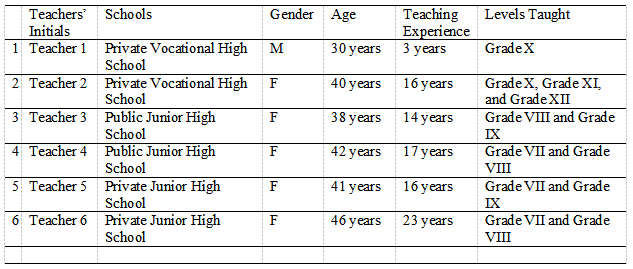
The participants of this study were six English teachers who, based on a preliminary survey, stated that they used AI tools to teach reading. The survey was done at the end of July 2025 with around ten secondary English teachers from ten different schools. From the ten teachers, only six responded. The detailed information is presented in Table 1.
Table 1. Teacher Respondents’ Data
Research design
The research was conducted through qualitative research, more specifically the researcher chose basic interpretative study. According to (Ary et al., 2019) basic interpretative study aims to understand opinions from the participants. This method was chosen to explain English teachers’ strategies to optimize the use of AI in teaching reading.
Research setting
The study was conducted in two junior high schools and one senior vocational high school using a questionnaire. The high school level was chosen because in this level, students learn a higher level of English skills which could be helped a lot with using digital technologies, especially AI tools. Therefore, richer ideas about how AI tools which were implemented could be obtained. The schools were chosen based on a criterion where the English teacher had an experience in using AI for teaching reading. The researchers used snowball sampling to choose the participants. As stated by Ary et al. (2019) snowball sampling refers to the situation when the first participant suggests other people who meet the criteria of the sample. Since there was little information about English teachers in Junior High School who met the criteria, the initial participants would be asked to identify the other teachers who met this criterion.
After the questionnaire was collected, the participants from the questionnaire session were chosen for an interview. The participants selected were two English teachers of two public junior high schools, two English teachers of two private junior high schools, and two English teachers of a vocational high school. The researchers decided to select participants from different kinds of school to gather opinions. The research was conducted from August to October 2025.
Data collection methods, instruments & procedures
The research used combinations of two methods. The first method was questionnaire. The questionnaire was used to obtain broad ideas and opinions about teachers’ choices of AI tools and their experience in using them. The questionnaire used close-ended and open-ended questions because this will give participants more flexibility to answer the questions. The questionnaire was done online and the respondents answered the questionnaire on their own, without the researcher around (Dawson, 2009).
The second method was semi-structured interviews. Interview sessions were done to obtain more explanations and experience from the participants which could not be explained during the questionnaire session. Semi-structured interviews were conducted by preparing initial guide questions while giving follow-up questions to probe more information, this can give flexibility and diversity to each participant (Zacharias, 2013; Mackey & Gass 2021). The method was chosen by the research. The researcher prepared an interview protocol and used a voice recorder. The interview protocol was adapted from (Chea & Xia 2024) who also discussed AI tools in teaching reading.
In order to collect the research data, the researchers followed several actions. Firstly, the schools were selected and requested permission from the principals to do research there. After permissions were obtained, questionnaires were given to the participants to answer through using Google Form from August to October 2025. After the questionnaires were collected, the research continued to the interview phase. An audio recorder was used to record what the participants said during the interview from November until December 2025. The audio records were transcribed and the data were used for analysis.
Data analysis
The researchers collected the research data using a questionnaire and semi-structured interviews to get information of English teachers’ view about AI tools they used for teaching reading and how they can maximize them.
The recorded information from both the questionnaire and semi-structured interviews was grouped in similar categories, this analysis method is commonly known as thematic analysis (Zacharias, 2013). By using this analysis method, the researcher could identify teachers’ choice of AI tools by groups. After that, each AI tool was discussed separately. This study discussed teachers’ choice of AI tools and what they think about them.
Research findings and discussion
In this section the analyzed data obtained from the questionnaires and interviews with the teacher participants are discussed.
AI tools used by high school English teachers & the reasons
All the AI tools used by high school English teachers to teach reading texts and their experiences in using them are elaborated in this section. This order of discussion starts from the tools with the least user and continues to the most used.
- Copilot
Copilot is an AI app developed by Microsoft. According to a piece of research conducted by Stratton (2024), the main use of the tool is to answer questions and solve problems, such as summarizing the content of a long text article. This tool can also be integrated in Word, Excel, and Microsoft Edge browser. It means Copilot can give the users information needed, summary, and it can also generate ideas based on the users’ desires. The image of Copilot is shown in Figure 1.
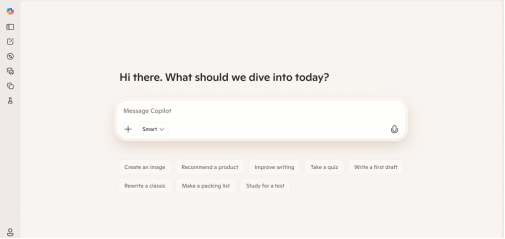
Figure 1. Copilot
(Source: https://copilot.microsoft.com/ )
The use of this AI tool was only limited to a single participant, who was from a private vocational school. He was Teacher 1. He used this AI tool to help him teach reading to his students. He felt that the Co-pilot supported his work in teaching. The underlying reason was because Copilot could suggest teaching activities based on reading texts and adapt the text word level based on his students’ reading skills. Teacher 1 asserted, “I feel more comfortable using Copilot because the result is more understandable and the language is more human” (Interview Session, 18/12/2025).
Teacher 1’s opinion is in line with Ozdemir (2024)’s research that Copilot can suggest activity ideas, images, and suggest resource sites. Ozdemir’s research aimed to find what support Copilot can provide for pre-service teachers to prepare reading lesson plans in Turkiye. Based on the research that was done through analyzing pre-service teachers’ teaching diaries and interviews it can be concluded that Copilot was useful for accessing resource websites, generating activity ideas, and providing a lesson plan framework.
- Wordwall
Wordwall is a digital game application for education. To be specific, it is a network-based digital gamification application. Wordwall provides games and quiz features which educators can use to measure students’ understanding towards the lessons (Khairunisa, 2021). According to (Rahmawati & Wijayanti, 2022), Wordwall can support teachers as a learning resource, media, and fun assessment tool for students by using pictures, audio, animation, and interactive games. Students can access this tool through laptops or smartphones. This makes students interested in learning English. The image of Wordwall is shown in Figure 2.
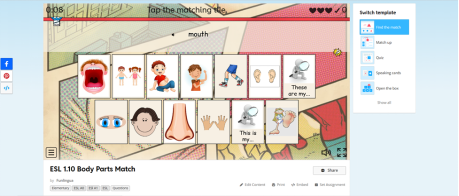
Figure 2. Wordwall
(Source: https://wordwall.net/)
There was only one participant who used this AI tool, and she was from a private vocational school. She was Teacher 2. She used this tool to give her students quizzes and in-class activities. She admitted that Wordwall brought engagement for the students when they learned reading in English. Teacher 2 further stated, “Wordwall can help students to be actively engaged by providing crosswords and vocabulary exercises” (Interview Session, 22/12/2025). This statement is supported by Sulala and Pranata (2025) who suggested that consistent and planned implementation of a Wordwall can enhance vocabulary retention, independent study habits, and improve students’ engagement in class.
- Quizlet
Quizlet is an online platform which provides a diverse educational tool. As explained by Özdemir & Seçkin (2024) it can provide flashcards, gamified activities, evaluation assessments, etc. Fursenko et al., (2021) also added that Quizlet can also be a platform that enables learners to personalize their study materials through varied modes of learning, such as flashcards, games, and quizzes. Teachers can use this to prepare their activities or quizzes and then invite their students to join using their own devices. The image of Quizlet is shown in Figure 3.
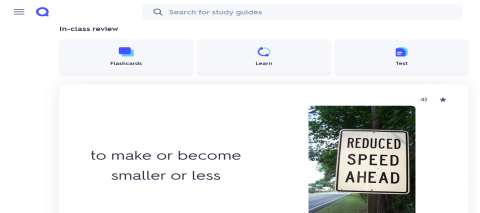
Figure 3. Quizlet
(Source: https://quizlet.com/)
One of the six participants, specifically the teacher from the public junior high school, used this AI tool. She was Teacher 3. She used this tool to give her students quizzes and activities in class as it makes the students more engaged with the lesson first. She stated, “I usually use this tool as a pre-teaching activity, before we do the main reading activities. After that, they will be more motivated to do the rest of the activities” (Interview Session, 9/9/2025).
Teacher 3’s statement is in line with Thu and Satomi Kawaguchi (2021) research which shows that Quizlet motivates and engages students in the learning activities. Their research aimed to learn the difference between using Quizlet and physical flashcards in teaching reading for ninth grade students in Vietnam. The research was done using pre-test, post-test, questionnaire, and interview. Based on the research, it can be concluded that Quizlet gives more enjoyment and can enhance English skills more than physical flashcards, resulting in more students preferring Quizlet to flashcards. It is because Quizlet provides multimodal input such as visual and audio in the form of games.
- QuestionWell
QuestionWell is an online AI platform which is used to generate questions based on reading texts. According to Bialik (2026), users can generate questions based on a text or based on the topic given to the AI tool. Teachers can upload their texts on this platform and ask this platform to provide questions. Alternatively, teachers can also ask QuestionWell to generate questions based on online texts or videos. The image of QuestionWell is shown in Figure 4.
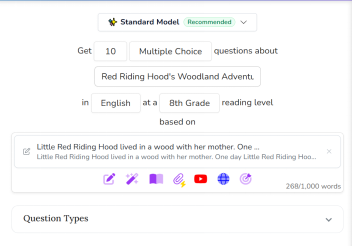
Figure 4. QuestionWell
(Source:https://questionwell.org/)
Out of six participants, there are two users of this AI tool (Teacher 3 and Teacher 4) from the public junior high school. They argued that this tool helps them prepare comprehension questions and critical thinking questions which give students a challenge in learning. This statement is supported by research (Zuhri et al., 2024) which argues that QuestionWell shows a potential as a supporting tool for teachers in generating valid and reliable multiple-choice questions.
- ChatGPT
ChatGPT (Chat Generative Pre-Trained Transformer) is an AI-based tool developed by OpenAI, which enables text generation based on user prompts. According to Halaweh (2023) this tool is designed to understand human language and generate relevant responses to users’ needs. It is able to provide responses in forms of texts or images. The image of ChatGPT is shown in Figure 5.
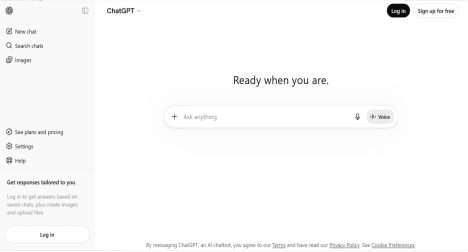
Figure 5. ChatGPT
(Source: https://chatgpt.com/)
Half of the participants, specifically Teacher 2, Teacher 5, and Teacher 6 used ChatGPT as a tool to help improve their reading activities in the classroom. All three users of ChatGPT argued that it helped them a lot in preparing their reading activities. They argued that ChatGPT helped them generate reading texts, adapt texts, and also decide activities based on their reading texts. Teacher 2 stated, “I usually use this tool to generate texts based on students’ study field or interest, other than that with ChatGPT I can also adapt them according to students' understanding levels” (Interview Session, 22/12/2025).
This statement is supported by research from (Jendia & Hanita Hanim Ismail, 2023) which argues that when students are motivated to read based on their interest, they can be more encouraged to engage with the text, give more effort, and implement effective reading strategies. This research aimed to answer whether ChatGPT is effective in generating personalised materials for students. And the result is the students are more motivated to do their reading activities, other than that teachers can save more time in developing materials.
- Gemini
Gemini AI is an AI based technology which was developed by Google. It can generate responses based on the users’ requests. Based on research by Fitria (2025) Gemini AI can generate responses in forms of texts, images, audio, and video according to the users’ needs. Because of this, this tool can be effective to be used for many purposes such as education or content creation. Masalkhi et al. (2024) also added that Gemini AI brings a huge growth in chatbot technology because of its advanced features and capabilities. The image of Gemini is shown in Figure 6.
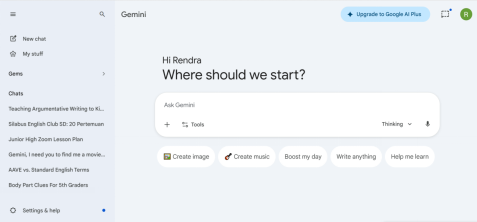
Figure 6. Gemini
Source: (https://gemini.google.com/app)
Gemini was used by Teacher 1, Teacher 3, and Teacher 4 to help them prepare reading activities in the classroom. They mostly used Gemini to adapt their reading texts' difficulty and generate comprehension questions based on their texts. However, Teacher 1 said that “Gemini is somewhat smarter and difficult to understand than other AI tools. Usually, after I asked Gemini about something and it gave me complex answers, I used another AI tool (Copilot) to simplify it for me. (Interview Session 18/12/2026).
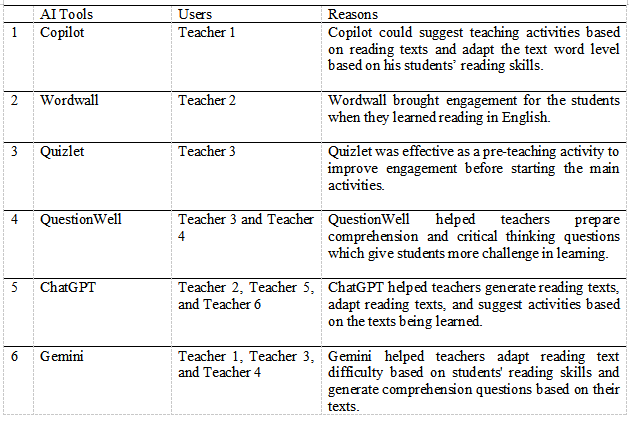
These are the AI tools used by six English teachers at the secondary level to teach reading comprehension. All the AI tools used and the teachers who used them are displayed in Table 2. The AI tools’ names and the teachers’ reasons are displayed in the table.
Table 2. AI Tools Used by the Teacher Respondents
Challenges faced by high school teachers in using the AI tools
This section discusses the challenges which the teacher participants encountered in using AI tools. The order of discussion is based on the seriousness of the challenges, it starts from the least to the most serious challenges.
Challenge 1: Technical Problem
There could also be technical issues that could happen during classroom activities which was experienced by Teacher 3. For example, some students did not have a smartphone or an unstable internet connection. This could be solved by pairing the students with their friends who have a smartphone. Other than that, sometimes a question wheel activity from Quizlet also has some issues. For example, one student has chosen an answer from the question wheel, but it did not change or move at all. Lastly, the problem with the AI system is that it did not provide the result that the users wanted. Therefore, Teacher 3 has to give the prompts as detailed as possible.
Challenge 2: Inaccuracy of AI Responses
According to research by (Abidin, 2024) who studied ChatGPT’s answers in the medical field, it is reported that the AI tool can accurately answer simple questions. However, after it was given more complex questions, the answers appeared to be inaccurate. Teacher 1 also encountered challenges in generating comprehension questions based on reading texts generated by Copilot. Nonetheless, he said that some questions were very difficult even by the teacher himself to understand and sometimes they were inaccurate. Teacher 1 stated, “When we use AI tools to generate reading comprehension questions our prompts have to be detailed. Sometimes when I asked 10 questions based on the text, 2 of the questions were too difficult to understand even by the teacher and sometimes they were irrelevant” (Interview Session, 18/12/2025). Therefore, he suggested that it was important to write detailed AI prompts for Copilot. If the tool still made difficult-to-understand comprehension questions, Teacher 1 would ask it to other AI tools.
Challenge 3: Students’ Dependency on AI Tools
Using AI tools frequently can make the students depend on the AI tools to learn. As Sain et al. (2024) reported from their research about the opportunities and challenges of ChatGPT, it was concluded that dependency on AI tools can bring various impacts to students such as cognitive ability impairment and reduced critical thinking skills. Teacher 2 complained that reliance on AI technology, whether using Wordwall or other sources, could limit student’s critical thinking ability growth. As Teacher 2 explained “Oftentimes, since they are accustomed to playing video games, the students paid more attention to the games itself rather than the content of English and did not even pay attention to teachers’ instructions.”. (Interview Session, 22/12/2025).
Because of these issues, Teacher 2 suggested some strategies to solve this issue. Firstly, after the students encountered new words from Wordwall, the class would discuss the meaning and how it can be used in real life. Other than that, Teacher 2 made a race for the students using questions based on the reading texts printed on small sheets of papers. The first students who could answer the most correct answers would win the race. This method could encourage them to actively participate in the competition and not to rely on their technology because they did not have the time to check on their phone to search on the internet or use AI too much.
Based on the questionnaires and interviews Teacher 4, Teacher 5, and Teacher 6 stated that they did not face any issue when they used AI tools. However, as elaborated above, there were three challenges that the teacher participants encountered when they utilized the AI tools. The challenges were technical problems, inaccuracy of AI tools, and students’ dependency on AI tools. Fortunately, the teachers also offered strategies to solve those problems. Overall, AI tools are man-made machines used to help us with our daily tasks. Therefore, it is still far from perfection and needs a lot of improvements. From these results and discussions there are some suggestions English teachers can implement in their teaching activities. Firstly, technical issues could happen anytime during teaching activity, thus teachers should always be ready with solutions should the issue come up. Additionally, AI tools are human-made tools that are still developing. Teachers should not rely too much on it because sometimes AI tools can give inaccurate responses to the users’ requests. Finally, teachers should also teach their students not to depend too much on AI tools because it can reduce students’ thinking skills. Teachers can make physical activities without using AI technology as an alternative.
Conclusion
This study tried to answer two research questions: [1] What AI tools do High School teachers use to teach reading texts to their students? And [2] What are the challenges of using AI tools in teaching reading texts to their students? By using questionnaires and semi-structured interviews with six English teachers from private and public junior high schools and a vocational high school, this research managed to identify which AI tools were utilized by the respondents to improve teaching reading in English, and the challenges that they faced.
The most frequently used tools by the participants were ChatGPT and Gemini AI which were used by three teachers. These tools were mostly used to generate and adapt reading texts based on students’ interests and understanding levels. Additionally, QuestionWell was chosen by two teachers for its feature to generate comprehension and critical thinking questions based on reading texts. There is Copilot, used by a teacher as an assistant who suggested teaching activities to exercise reading comprehension. There were also gamification platforms such as Wordwall and Quizlet which improved students’ engagement and motivation towards reading activities by giving them quizzes and games through their own devices.
These results showed that AI tools worked as supporting tools that helped teachers design the learning activities more effectively, efficiently, and engaging. By using these AI tools, the learning activities could enhance students’ motivation and reading comprehension. Even though there could be several challenges such as technical problems, the AI tools’ inaccuracy, and students’ dependency on AI tools. The teacher participants also provided strategies to solve those challenges.
Despite the valuable data derived from this research, there are some limitations of this study. First, the small number of participants. There were only 6 teacher participants. Though the six participants could provide insights about what AI tools they used, it cannot be widely generalized to all English teachers. Another weakness is the limited methods in collecting data. The researcher used only open-ended questionnaires and interviews. Future researchers can add more respondents from different levels of education. Furthermore, observations in English classrooms will also be necessary to be conducted. This is essential to obtain practical explanations for the use of AI tools in teaching reading. Hopefully, this research can encourage English teachers to explore AI tools to improve the effectiveness of teaching English reading activities in the digital era.
References
Abidin, Z. (2024). Evaluating the Precision and Dependability of Medical Answers Generated by ChatGPT. Journal of Science, Technology, Education, Art and Medicine, 1(1), 13. https://doi.org/10.63137/jsteam.744858
Alshriedeh, M. (2021). The impact of artificial intelligence programs on improving EFL students' reading skills. International Journal of English Linguistics, 11(1), 27-38.
Andrés, M. O. J., & Antonio, A. B. X. (2025). Advantages and disadvatages of artificial intelligence in the foreign language (English) teaching-learning process.
Ary, D., Jacobs, L. C., Walker, D. A., & K, C. (2019). Introduction to research in education (10th ed.). Cengage.
Bialik, M. (2026). TeachersFirst Review - QuestionWell. Teachersfirst.org. https://teachersfirst.org/single.cfm?id=19917
Chea, P., & Xiao, Y. (2024). Artificial intelligence in higher education: The power and damage of AI-assisted tools on academic English reading skills. Journal of General Education and Humanities, 3(3), 287–306. https://doi.org/10.58421/gehu.v3i3.242
Crompton, H., Edmett, A., Ichaporia, N., & Burke, D. (2024). AI and English language teaching: affordances and challenges. British Journal of Educational Technology, March, 2503–2529. https://doi.org/10.1111/bjet.13460
Daweli, T. W., & Mahyoub, R. A. M. (2024). Exploring EFL learners’ perspectives on using AI tools and their impacts in reading instruction: An exploratory study. Arab World English Journal, 10, 160–171. https://doi.org/10.24093/awej/call10.11
Dawson, C. (2009). Introduction to Research Methods : Apractical guide for anyone undertaking a research project (4th ed.). How To Books.
De la Vall, R. R. F., & Araya, F. G. (2023). Exploring the benefits and challenges of AI-language learning tools. International Journal of Social Sciences and Humanities Invention, 10(01), 7569–7576. https://doi.org/10.18535/ijsshi/v10i01.02
Fitira, R. L. N., Zuhairi, A., & Umamah, A. (2024). The effectiveness of AI assisted reading text for reading aloud technique for students’ reading skills. Jurnal Penelitian, Pendidikan, Dan Pembelajaran, 0–6.
Fitria, T. N. (2025). Revolutionizing English learning with AI: Insights from ChatGPT and Google Gemini. International Journal of Computer and Information System (IJCIS), 6(2), 77–91. https://doi.org/10.29040/ijcis.v6i2.219
Fursenko, T., Bystrova, B., & Druz, Y. (2021). Integrating Quizlet into aviation English course. Advanced Education, 8(18), 118–127. https://doi.org/10.20535/2410-8286.217990
Halaweh, M. (2023). ChatGPT in education: Strategies for responsible implementation. Contemporary Educational Technology, 15(2), https://doi.org/10.30935/cedtech/13036
He, X. (2024). Enhancing reading comprehension with AI-generated adaptive texts. International Journal of New Developments in Education, 6(7), 46–52. https://doi.org/10.25236/ijnde.2024.060708
Hsiao, J.-C., & Chang, J. S. (2023). Enhancing EFL reading and writing through AI-powered tools: design, implementation, and evaluation of an online course. Interactive Learning Environments, 32(9), 1–16. https://doi.org/10.1080/10494820.2023.2207187
Indarti, T., Zaenal, U., Fanani, Nasrullah, R., Septiana, H. & Afdholy, N. (2024b). Innovative artificial intelligence (AI) technology learning support for Indonesian language teachers at a junior high school in Tuban. TRANSFORMASI Jurnal Pengabdian Masyarakat, 20(2), 438–452. https://doi.org/10.20414/transformasi.v20i2.11317
Jendia, J., & Hanita Hanim Ismail. (2023). Developing personalised reading materials for Malaysian primary school pupils using ChatGPT: A review. International Journal of Academic Research in Business & Social Sciences, 13(12). https://doi.org/10.6007/ijarbss/v13-i12/20172
Khafidhoh, K., & Abdullah, N. N. H. (2022). Junior high school students’ difficulties in reading English texts. Ahmad Dahlan Journal of English Studies, 9(2), 78–90. https://doi.org/10.26555/adjes.v9i2.213
Khairunisa, Y. (2021). Pemanfaatan fitur gamifikasi daring Maze Chase–Wordwall sebagai media pembelajaran digital mata kuliah statistika dan probabilitas. Mediasi, 2(1), 41–47. https://doi.org/10.46961/mediasi.v2i1.254
Khanzode, Ku. C. A., & Sarode, Dr. R. D. (2020). Advantages and disadvantages of artificial intelligence and machine learning: A literature review. International Journal of Library & Information Science, 9(1), 30–36.
Mackey, A., & Gass, S. M. (2021). Second language research: Methodology and design. Routledge. https://doi.org/10.4324/9781003188414
Masalkhi, M., Ong, J., Waisberg, E., & Lee, A. G. (2024). Google DeepMind’s Gemini AI versus ChatGPT: A comparative analysis in ophthalmology. Eye, 1–6. https://doi.org/10.1038/s41433-024-02958-w
Novawan, A., Ikeda, O., & Walker, S. A. (2024). The new face of technology-enhanced language learning (TELL) with artificial intelligence (AI): Teacher perspectives, practices, and challenges. Journal of English in Academic and Professional Communication JEAPCO, 10(1),
Nugrahawati, A. W. (2024). Enhancing reading comprehension in higher education: Exploring the role of artificial intelligence in teaching reading, 9–19. https://doi.org/10.24090/celti.2024.1005
Oakhill, J., Cain, K., & Elbro, C. (2014). Understanding and teaching reading comprehension. Routledge.
Özdemir, S. (2024). Getting support from Microsoft Copilot in lesson plan preparation: Pre-service teachers’ experiences and opinions. Information Technologies and Learning Tools, 104(6), 180–196. https://doi.org/10.33407/itlt.v104i6.5859
Özdemir, O., & Seçkin, H. (2024). Quantifying cognitive and affective impacts of Quizlet on learning outcomes: a systematic review and comprehensive meta-analysis. Frontiers in Psychology, 15 https://doi.org/10.3389/fpsyg.2024.1349835
Rahmawati, A. P., & Wijayanti, P. R. (2022). Implementing Joyful Learning Strategy Using Wordwall in Order to Improve Reading Comprehension Skills. Proceedings Series on Physical & Formal Sciences, 3, 32–35. https://doi.org/10.30595/pspfs.v3i.261
Sain, Z. H., Chanda Chansa Thelma, Hasan Baharun, & Agatha Cryssandra Pigesia. (2024). ChatGPT for positive impact? Examining the opportunities and challenges of large language models in education. International Journal of Educational Development, 1(3), 87–100. https://doi.org/10.61132/ijed.v1i3.75
Shadiev, R., & Yang, M. (2020). Review of studies on technology-enhanced language learning and teaching. Sustainability, 12(2), 524 https://doi.org/10.3390/su12020524
Stratton, J. (2024). Copilot for Microsoft 365. Springer Nature.
Sulala, W. A., & Pranata, S. A. (2025). Teachers’ experiences in teaching reading comprehension using word walls in middle schools. RIGGS: Journal of Artificial Intelligence and Digital Business, 4(3), 2545–2549. https://doi.org/10.31004/riggs.v4i3.2358
Thu, T., & Satomi Kawaguchi. (2021). The effectiveness of Quizlet in improving EFL learners’ receptive vocabulary acquisition. Asiatic: IIUM Journal of English Language and Literature, 15(1), 115–159. https://doi.org/10.31436/asiatic.v15i1.2314
Toyokawa, Y., Izumi Horikoshi, Majumdar, R., & Ogata, H. (2023). Challenges and opportunities of AI in inclusive education: A case study of data-enhanced active reading in Japan. Smart Learning Environments, 10(1) https://doi.org/10.1186/s40561-023-00286-2
UNESCO. (2019). Artificial intelligence in education: challenges and opportunities for sustainable development.
Zacharias, N. T. (2013). Research made simple: A course book for beginning researchers in second language education.
Zuhri, N.Z., Syihabuddin, S., & Tatang, T. (2024). Analisis validitas, reliabilitas, dan tingkat kesukaran soal bahasa Arab tingkat SMP berbasis artificial intelligence (AI) melalui platform QuestionWell. Jurnal Pendidikan Dan Pembelajaran Indonesia (JPPI), 4(2), 693–704. https://doi.org/10.53299/jppi.v4i2.576
Appendices
Appendix 1: Questionnaire Questions
- Please mention your name
- Please mention the school where you teach
- How long have you been teaching English?
- Do you use AI technology to teach English?
- Do you use AI technology to teach reading skills in English?
Example: Adapting reading texts, making questions or activities from texts, and text to voice AI generator) - What AI tools do you use for teaching reading?
- How do you use the AI tools for teaching reading?
- Did you find the AI tools helpful in improving your students’ English reading skills?
- Do you want to continue using these AI tools in the future for teaching reading?
- Would you recommend using these AI tools to other teachers for English reading instruction?
- Are you willing to be interviewed further?
Appendix 2: Interview Questions
- Can you describe how you use AI tools for teaching reading in your class?
If it needs a prompt, can you explain the prompt? - How do you preview your lesson before class when using AI tools?
- What benefits have you noticed in students’ engagement or comprehension when using these tools?
- Can you share a successful example where an AI tool significantly helped with a reading lesson?
- Have you adapted AI-generated materials?
If yes, how do you adapt them? - Did you face any challenges or technical difficulties when using AI tools?
If yes, how did you handle them? - What kind of training would help you use AI tools more effectively?
- What makes you decide to continue or stop using a particular AI tool?
9. If you need to recommend one AI tool to other teachers, which would it be and why?
Coming soon! Please check the Pilgrims in Teacher Training courses in 2027 at Pilgrims website.
Exploring Secondary English Teachers’ Choices of AI Tools for Teaching Reading to High Schoolers and Their Challenges
Narendra Setia Herawarman, Indonesia;Listyani Listyani, Indonesia;Yustinus Calvin Gai Mali, Indonesia