First Days, Strong Roots: Before the Learning Begins
Effie Kyrikaki, MSc in Applied Psychology, is a teacher trainer, mentor and edupreneur who founded the NeuroLearningPower® framework. Her work centres on Whole School Wellbeing and Humane Intelligence, and she speaks and writes internationally on teacher wellbeing, the role of language and coaching psychology in education. As a life-long learner, she has just started a new BSc in Psychology with a major in neuroscience and psychotherapy.
Email: effie@metamathesis.edu.gr

Introduction
It is one of the first lessons of the year. You have planned it carefully: books ready, activity prepared, names on your list. A student walks in, chooses a seat and looks around. Before you have taught a single word, they are already learning something.
They notice your face when you greet them. They watch what happens when someone answers incorrectly. They see who gets invited into the conversation and who stays invisible. Without saying it aloud, they are beginning to ask: Am I safe here? Will I belong? Can I do this? What will happen when I get it wrong?
And while we are thinking about what we are going to teach, they are already learning what it feels like to learn with us.
“A lesson is a seed. Classroom climate is the soil.”
We can choose the best seed, plan carefully and know exactly how we want it to grow. But whether it can take root depends partly on the ground it lands in. Readiness, safety, connection and confidence prepare that ground.

Figure 1. Before the content, create the climate.
The climate before the curriculum
The first lessons are more than introductions; they are culture-building lessons. From the moment students enter, they are gathering information about how they are greeted, whether their name is remembered, what happens when somebody hesitates, how mistakes are treated, whether humour feels kind or exposing, who gets noticed and who can quietly disappear into the back row.
No single moment seems particularly dramatic, but together these moments begin answering deeply human questions: Is this a safe place for me? Do I matter here? Can I succeed here? What happens when learning becomes difficult? Who can I become here? By the time we begin teaching the syllabus, another curriculum has already started.
So perhaps the most useful beginning-of-year question is not only, What am I going to teach in my first lessons? It may also be, What do I want my students to learn about being a learner here?
Students are reading the room before they read the book
At a recent workshop, I chose not to begin with theory. We started with a tongue twister. Within a couple of minutes, the atmosphere in the room had changed. There was laughter, eye contact, energy and that wonderful permission to get something slightly wrong in front of other people. We had not opened a coursebook or “covered” any content, yet the conditions for learning had shifted.
Emotional climate is sometimes treated as the pleasant warm-up before the “real” lesson begins. Research suggests it is much more than a nice extra. A large systematic review found that a positive classroom climate is linked with students’ motivation, engagement, academic achievement and psychological wellbeing (Wang et al., 2020). A meta-analysis found that when students experience stronger teacher support, they tend to engage more and achieve more, with emotional support playing an especially important role (Tao et al., 2022). This matters greatly in language classrooms, where speaking, making mistakes and trying again are visible parts of learning. Recent research also points to links between perceived teacher emotional support and student learning (Fu & Zhou, 2026). Belonging matters too: when students feel accepted, noticed and part of the group, they are more likely to stay involved, persist and learn (Korpershoek et al., 2020).
The teacher is part of the climate
September has its own particular kind of energy. New books, names to remember, parents to meet and plans that change three – or thirteen – times before they finally settle. In these first days, among all the running around, there is one part of the equation we do not always remember: ourselves.
We enter the classroom carrying our lesson plan, our materials, our expectations and our good intentions, but we also bring our pace, our facial expression, our tiredness, our enthusiasm, the meeting we have just left, the traffic we have just survived and whatever else the day has placed in our nervous system. Our students encounter all of that before they encounter grammar.
“The nervous system of the teacher is part of the equation, too.”
Research on teacher wellbeing places the teacher firmly inside this picture. When teachers have the wellbeing, support and inner resources to stay present, connect and respond with greater choice, they are better able to create supportive conditions for their students. Reviews link teacher wellbeing with teacher–student relationships and student outcomes, while research in ESOL education highlights how emotional and professional support for teachers contributes to the flourishing of the wider educational ecosystem (Dreer, 2023; Kyrikaki, 2023). Teacher wellbeing and student wellbeing, therefore, are not separate conversations; together, they help create the conditions for whole-school wellbeing and flourishing.
Humane Intelligence is the capacity to regulate ourselves, stay connected to others and choose our response under pressure. In education, it begins with the teacher because the adult’s state, presence and way of responding help shape the emotional climate of the room. A more regulated, relational and flexible teacher is better able to create the readiness, safety, connection and confidence that support learning.
“The first curriculum you teach is your own neurology.”
That statement is not an invitation to place another impossible demand on teachers. It does not mean that educators must be endlessly calm, cheerful or perfectly regulated, nor does it mean that we are responsible for everybody else’s emotional state. It means something much more human: our state becomes part of the information available in the room.
Perfection is not the goal. What matters is greater awareness and the capacity to return: to notice our state, reconnect with the people in front of us and create a little more choice in how we respond.
Teacher wellbeing is not merely a private concern waiting for us after the school day. It enters the classroom with us.
Four conditions beneath visible learning
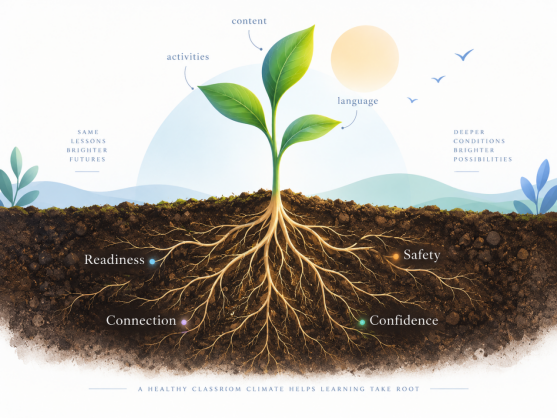
Figure 2. The conditions beneath visible learning.
1. Readiness comes before performance
Before learners can participate, remember, risk an answer or sustain attention, they first need to be sufficiently ready to engage. A learner may enter carrying tiredness, excitement, anxiety, an argument from the playground or simply the mental noise of a long day. Readiness is not the same as motivation, and it certainly does not mean that every student must arrive calm, focused and enthusiastic.
This is why the first minutes matter. A predictable opening, a familiar routine, a little movement or simply having a moment to arrive can help students shift from physically being in the room to becoming more available for learning. Readiness invites a useful question: What helps my brain and body get ready to engage? Helping learners recognise those conditions begins to build self-awareness rather than assuming that attention can simply be demanded on cue.
2. Safety is not the absence of challenge
Safety should never be confused with making learning comfortable or easy. Learning inevitably contains uncertainty. It asks us to attempt things we cannot yet do, speak before we are completely sure, expose gaps in our knowledge and risk being wrong. Safety is what makes that participation possible.
During the first lessons, learners may be silently asking, Can I hesitate here? Can I ask? Can I not know yet? Small classroom behaviours provide the answers. Perhaps the clearest test comes when somebody makes a mistake. Do other students laugh? Does the teacher’s face change? Or can the mistake become information about what might happen next? Difficulty can reveal gaps and prepare the learner for further learning, provided that the climate allows mistakes to exist without shame.
3. Connect before you correct
Connection can easily be dismissed as the “soft” part of the lesson: pleasant and desirable, but secondary to serious learning. Yet for many students, connection is part of what makes serious learning possible. A name remembered, a face noticed, a partner offered or a tentative answer acknowledged before it is corrected are all small relational signals telling learners whether there is genuinely a place for them in the room.
This is also the thinking behind connect before you correct. It does not mean avoiding feedback or lowering expectations. It means thinking carefully about timing and delivery. An incomplete answer does not always need to meet correction first. Sometimes the first move is contact: a nod, a thank you, an “I can see where you’re going with that.” Then we guide. Correction lands differently when connection remains intact.
4. Confidence is built through experience
Confidence is often treated as something learners either bring into the classroom or they do not. The Greek word for self-confidence, αυτοπεποίθηση, points to something important: it contains πεποίθηση — belief or conviction. Confidence is continually shaped by the evidence learners gather through experience.
The first days offer small but powerful pieces of evidence about themselves as learners: I answered and survived. I asked for help and was not judged. I made a mistake and could try again. I understood something that looked difficult at first. These experiences matter particularly for learners who arrive carrying an established story such as “I’m not good at English.”
“Confidence does not require constant success, nor does it grow from empty reassurance.”
It develops as challenge becomes manageable, progress becomes visible and students experience themselves as capable of taking the next step. The message is not “This will always be easy.” It is something much more useful: “When this becomes difficult, I can still do something.”
From conditions to agency
Readiness, safety, connection and confidence describe important conditions of the learning climate. The Rooting Path takes the next step by giving students a way to recognise, influence and contribute to those conditions themselves.
Centre supports readiness by inviting learners to notice what helps their brain and body become available for learning. Connections translates safety and belonging into relational behaviour by asking students not only what helps them feel included, but how they can help classmates feel included too. Choice builds confidence through agency: rather than interpreting difficulty as proof that they cannot do something, learners identify a possible next move — ask, pause, try again, break the task down or choose another route. Grow is what those roots are for. Repeated experiences of readiness, safety, connection and meaningful choice give learners evidence about the learner, and the person, they are becoming.
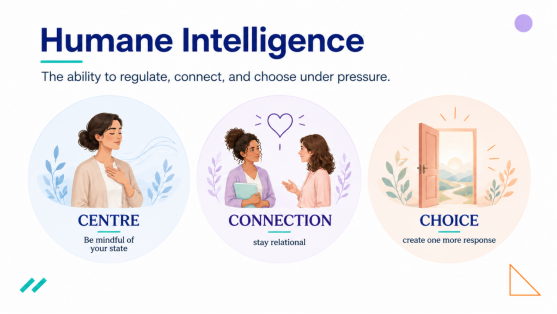
Figure 3. Centre, Connection and Choice: three capacities that support the Rooting Path.
The Rooting Path: from climate to shared agency
The Rooting Path grew from the same idea as Humane Intelligence, but turns the lens towards learners. If Humane Intelligence begins with the teacher shaping the climate, the Rooting Path helps students participate in that climate themselves. Centre, Connections and Choice translate regulation, relationship and agency into questions learners can understand and use, while Grow asks what kind of learner — and person — these repeated experiences are helping them become.
The Rooting Path is one practical response to a simple question: What helps you learn here? Many beginning-of-year activities understandably help us discover students’ interests. Favourite colour? Favourite food? Hobbies? These can be enjoyable and useful, but they tell us relatively little about how the learner experiences learning itself.
The Rooting Path opens a different conversation. It gives students a structured way to notice what helps them become ready, what helps a group feel connected, what choices remain available when learning becomes difficult and what they want to grow.
“Your experience matters here. You are not a passive recipient of my teaching.
You have a voice in how we learn together.”
Centre: notice what helps you become ready
Centre begins with self-awareness. The question is simple: What helps me become ready to learn? For younger or lower-level students, the answer might be concrete: quiet, movement, time, clear instructions or knowing what comes next. Older learners may identify predictability, preparation, focus or a little time to transition from whatever came before.
The aim is not to promise that everyone will always receive their ideal conditions. It is to help learners recognise that readiness has signals and that some of those signals can be influenced. The learner begins to move from “I am either ready or I am not” towards “I can notice what helps me become more ready.”
Connections: help build the class you want to belong to
Connections turns attention outward. Rather than asking only What helps me feel good here?, students begin considering another question: How can I help other people in my class feel that they belong? Listening, using someone’s name, including a classmate, giving people time, not laughing at mistakes and offering help all become part of the conversation.
This matters because classroom connection is not produced by the teacher alone. Students themselves contribute continuously to the emotional climate around them. The shift is subtle but important: from belonging received to belonging created together.
Choice: find one more way forward
Choice becomes especially important when learning gets difficult. Learners may identify asking for help, trying again, taking more time, working step by step or trying another way. Older or more proficient students can go further by asking what options remain before they give up, who they could ask, what they could change or what has helped them in the past.
Difficulty can easily become identity. “I don’t understand this” becomes “I’m bad at English.” Choice interrupts that jump and introduces another possibility: I am stuck, and I still have a next move. These are self-leadership options that can follow learners for life.
Grow: from strategy to identity
Grow is intentionally different. It asks learners to look beyond what they want to achieve and towards who they are becoming. With younger students, the unfinished sentence can be beautifully simple: I am… kind, brave, calm, strong, curious, ready to try. Older learners may explore a broader intention: This year I would like to become a little more confident, curious, independent, connected, willing to ask, willing to try.
This is where the metaphor matters. Roots are not the final outcome. We build readiness, relationships and choice so that something can grow.
Using the Rooting Path in the language classroom
Begin by presenting the Rooting Path as reflection rather than a test. Tell students that there are no correct answers and that they decide what they want to share. Because the activity is designed to support psychological safety, the way we facilitate it needs to model that safety from the beginning.
Give learners time to respond individually before discussing their answers. Younger students might circle words, draw, choose pictures or complete very short sentences, while older learners can write more freely. Sharing should be invited rather than demanded. The purpose is not personal disclosure; the goal is learner voice.
Then listen for patterns across the group. Perhaps several students need more time before speaking. Perhaps many value knowing what comes next. Perhaps mistakes being laughed at appear repeatedly as a barrier, or learners say that they participate more readily when they have a partner. These answers are not a list of demands. They are information about the learning environment.
Finally, turn that information into a small classroom agreement. Ask: What could we do in this class to help more people learn well? The resulting commitments should remain small enough to live by: We give people time to answer. We help when someone is stuck. We do not laugh at mistakes. The agreement becomes more meaningful when it grows from something students themselves have identified rather than arriving as another list of rules.
Experience it before you facilitate it
The Rooting Path also has value for educators. Before using it with students, try answering its questions yourself. What helps you arrive ready? What helps you remain connected? What choices are available when teaching becomes difficult? What would you like to grow this year?
That short reflection returns us to where this article began. Teachers are not outside the learning environment. We are part of it.
One path, different levels
The Rooting Path does not need to sound the same for every age or proficiency level. With very young learners or beginners, the A1 edition keeps language extremely simple and supports responses through familiar words and short prompts. The A1+/A2/B1 edition keeps the questions linguistically accessible while allowing richer reflection, particularly as students begin connecting their own learning needs with responsibility towards classmates.
At B2–C2, the same framework can support deeper discussion about belonging, agency, support, classroom culture and learner identity. The framework remains recognisable while the lexical and reflective load changes. The purpose is not to simplify the meaning for younger or less proficient learners, but to make that meaning accessible.
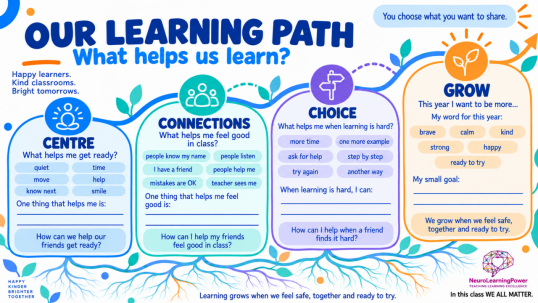
Figure 4. One version of the Rooting Path adapted for language learners.
From ice-breaker to culture-builder
The Rooting Path works naturally in the first days of class, but its real potential appears when we return to it. A few weeks later, the class can ask whether the same things still help, what has changed, whether the commitments they created are visible in everyday classroom life and what they may now need more of.
At that point, the activity is no longer an ice-breaker. It has become part of the shared language of the class. And perhaps that is the larger invitation at the beginning of a new school year. Instead of using September only to tell students what we expect from them, we can also communicate something else: you matter here, your experience of learning matters, you have choices, and we are going to build some of this together.
That is a very different way to begin.
Coming back to the roots
The first days of a language course are often filled with practical necessities: names, books, routines, expectations and the first pieces of content. Yet beneath all of them, another process is already underway. Students are learning whether this is a place where they can risk language, survive mistakes, ask for help, belong to a group and discover what they can do when learning becomes difficult.
Strong roots do not remove challenge. They create conditions in which challenge can become learning. Readiness, safety, connection and confidence prepare the soil; Centre, Connections and Choice help learners participate in tending it; Grow reminds us what those roots are for.
Perhaps, then, the first question of the year is not simply What will I teach? It is also: What kind of learning climate are we beginning to grow together?
Interested in having all the three versions (A1, A1+-B1, B2/C2) of the Rooting Game?
Send your request to metamathesis@gmail.com and I will be happy to share!

Ready to come home to yourself? Learn more and join the waiting list for the fully sponsored EmpowerED Beginnings cohort - four free weeks of wellbeing training for women educators ready to reclaim who they are beneath the roles they carry.
www.empower-edu.eu
References
Dreer, B. (2023). On the outcomes of teacher wellbeing: A systematic review of research. Frontiers in Psychology, 14, 1205179. https://doi.org/10.3389/fpsyg.2023.1205179
Fu, X., & Zhou, X. (2026). The impact of perceived teacher emotional support on student learning: A meta-analysis. Behavioral Sciences, 16(8), 1322. https://doi.org/10.3390/bs16081322
Korpershoek, H., Canrinus, E. T., Fokkens-Bruinsma, M., & de Boer, H. (2020). The relationships between school belonging and students’ motivational, social-emotional, behavioural, and academic outcomes in secondary education: A meta-analytic review. Research Papers in Education, 35(6), 641–680. https://doi.org/10.1080/02671522.2019.1615116
Kyrikaki, E. (2023). Emotional and professional support measures for ESOL educator flourishing: Peer support and mentoring as factors of (women) educator well-being. In J. Miller & B. Otcu-Grillman (Eds.), Mentoring and reflective teachers in ESOL and bilingual education (pp. 215–247). IGI Global Scientific Publishing. https://doi.org/10.4018/978-1-6684-8380-0.ch009
Tao, Y., Meng, Y., Gao, Z., & Yang, X. (2022). Perceived teacher support, student engagement, and academic achievement: A meta-analysis. Educational Psychology, 42(4), 401–420. https://doi.org/10.1080/01443410.2022.2033168
Wang, M.-T., Degol, J. L., Amemiya, J., Parr, A., & Guo, J. (2020). Classroom climate and children’s academic and psychological wellbeing: A systematic review and meta-analysis. Developmental Review, 57, 100912. https://doi.org/10.1016/j.dr.2020.100912
Coming soon! Please check the Pilgrims in Teacher Training courses in 2027 at Pilgrims website.
First Days, Strong Roots: Before the Learning Begins
Effie Kyrikaki, Greece