34th IATEFL Poland International Conference, 19th-21st September, 2025
Hanna Kryszewska is a teacher, teacher trainer, trainer of trainers. She was a senior lecturer at the University of Gdańsk, Poland. She is co-author of resource books: Learner Based Teaching, OUP, Towards Teaching, Heinemann, The Standby Book, CUP, Language Activities for Teenagers, CUP, The Company Words Keep, DELTA Publishing, and a course book series for secondary schools: ForMat, Macmillan. She is also co-author of a video-based teacher training course: Observing English Lessons, and online course for Orient Black Swan on 21st Century Skills and Teaching the whole person: Humanising language teaching. Hania is a Pilgrims trainer, OTA trainer and editor of HLT Magazine.
The venue
The conference was held in the historic town of Łódź famous for its role as a textile-manufacturing hub in late 19th and first half of the 20th centuries. Its Central Museum of Textiles displays 19th-century machinery, fabrics and handicrafts linked to the trade. Once a factory, the restored Manufaktura complex is now a lively culture and arts center. Nearby is the grand Poznanski Palace, home to the City Museum, with artwork and objects depicting the history of Łódź.
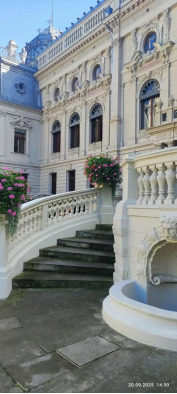
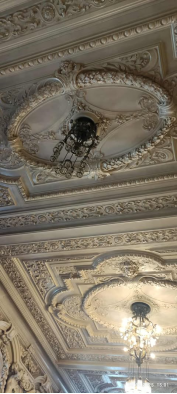
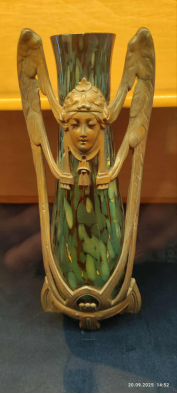
The conference was a great event. Lots of buzz, inspiration, new ideas, rekindled friendships and an influx of new energy.
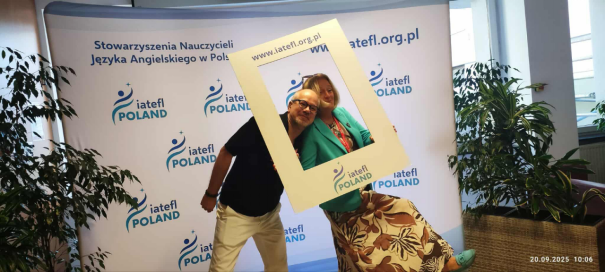
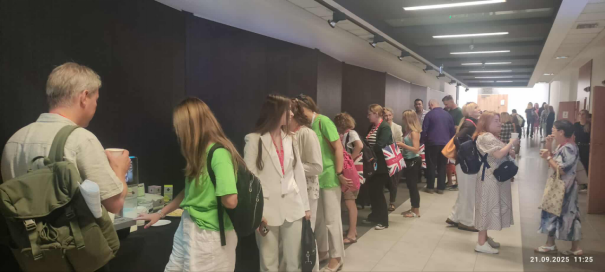
There were plenty of new publications from local Polish publishers. It was so refreshing that there were not just the usual suspects.
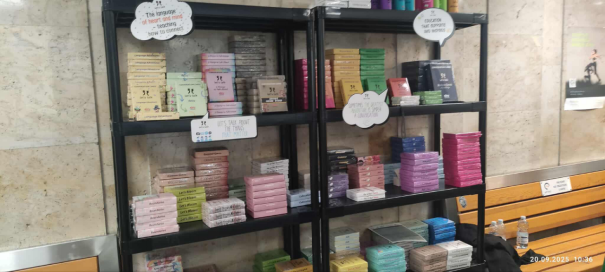
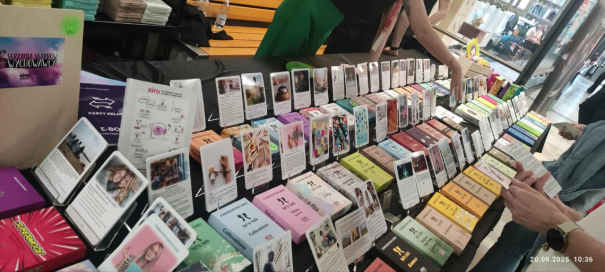
And I was impressed by the display of books which I reviewed for the Polish Ministry of Education which are aimed at the secondary level.
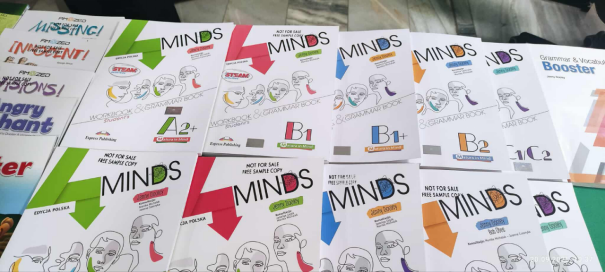
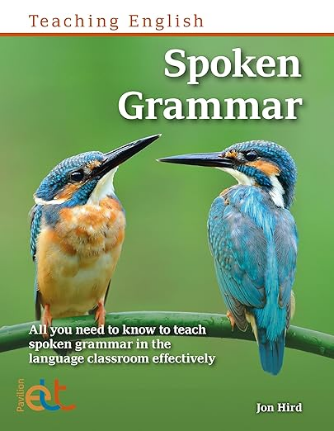
I was happy to attend Jon Hird’s session in which he presented his new book with great ideas and display of impressive knowledge of the quirks of English language.

The plenary talks were great; glimpses of some of them are below:
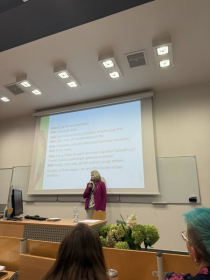
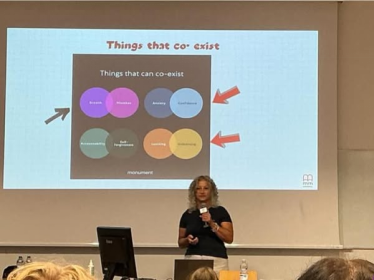

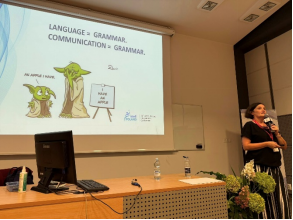
Thank you to the brilliant presenters: Marta Rosińska, Your session, which showed cultural change and boldly addressed so many important topics related to education that it is impossible to summarize, was a real biological, psychological, and methodological feast. Hania Kryszewska, thank you for an inspiring session that spoke so gracefully about deepening teaching and deep processing, connecting it with mediation on so many levels. Thank you for the depth of your teaching. Monika Cichmińska, the pen warmed up the tablet screen as I tried to quickly jot down these (seemingly obvious and familiar) brilliant excerpts from grammar teaching in a human, rather than fancy, practical, rather than exam-oriented way. It was a true story of an adventure like no other. Molly Cloud, thanks for your session about using critical thinking and learning/unlearning. I really appreciated the materials you used and how you showed us you work with them. I loved the adventure of joining all of it with the communicative approach. FB
My plenary: Lessons that matter
Abstract
In language classes students must understand. This takes place or should take place on a number of levels. Step one involves comprehension questions, step two - teaching for understanding e.g. reading between the lines, step three - critical thinking, step four - mediation - interaction with the text and other students, step five, the pinnacle: reflection hopefully leading to a change of heart. The plenary looks at the content and texts we choose and how much they matter. The 17 Sustainable Development Goals provide a helpful guide when we look for good topics.
Summary
The plenary first looks at the ways or levels at which students understand texts /see abstract/. It analyses all the 5 levels of understanding with the main focus on level five – the change of heart. In other words, our content can make ripples and spread ideas. In the times when education takes on board the 17 sustainability goals, staging clever ‘aha moments’ is one of the ways to address SDG. The plenary provides a clear framework of looking at understanding as such supported by examples. It makes reference to SGD for guidance and prepares ground for the workshop to follow.
My workshop: Thought provoking language classes: choosing and using authentic materials
Abstract
With the fast-changing world topics that matter or are really relevant come and go; sometimes they evolve very fast due to new developments. Also, each class is different, and we need to choose and address topics and issues which really relate to our learners and the contexts they live in, and above all make them think. No coursebook can keep up. This practical workshop shows how to choose and use authentic materials to fill the gap.
Summary
The workshop is a follow up of my plenary: Lessons that matter. It presents a small but varied collection of practical activities how to select visual materials and texts, how to search for or spot topics of interest for the learners, how to turn written texts into audio materials, how to simplify or adapt texts and many other. At the same time, it looks at how the texts can be prepared fast without too much preparation or even during the lesson. Finally, it will hopefully spark a discussion among the attendees on how much we need to spell out in the lesson the point we want to make or just leave it to sink in and be slowly absorbed in own time.
Parting word
Going to conferences is such a refreshing experience. For those who could not attend I will write up my plenary and workshop and publish the texts in HLT.
I hope to see you at the next IATFL Poland Conference.
Please check the Pilgrims in Segovia Teacher Training courses 2026 at Pilgrims website
Pilgrims: New Times - Responding to Our New Realities
Phil Dexter, Teacher Trainer Coordinator and Editor of The Pilgrims Teacher Trainer Journal34th IATEFL Poland International Conference, 19th-21st September, 2025
Hania Kryszewska, Pilgrims Trainer