Free the Bee – Animated Storytelling with Young Learners in Gaza
Note
This article was first published in the winter 2025 edition of Melta News and is republished with kind permission.
Luzan Matar is a teacher, a translator and an artist from Gaza, Palestine. She holds a masters degree in translation and is interested in studying art and culture which can bridge the gap between nations around the world. Luzan hopes to pursue her PhD in children’s literature or education.
David Heathfield is a world storyteller, teacher trainer and writer from Exeter, UK. The author of two books – Storytelling with our Students and Spontaneous Speaking (both DELTA) and numerous articles and book chapters, he provides Creative and Engaging Storytelling for Teachers (CrEST) courses for participants worldwide as well as creative coaching via Zoom.
Together Luzan and David are just starting out on a new project Animating Gaza Stories in collaboration with the British Council. This SARD (Stories of Adversity, Resilience and Determination) project will result in inspiring and meaningful animated learning materials created by young people in Gaza especially for learners of English not only in Palestine but all around the world.
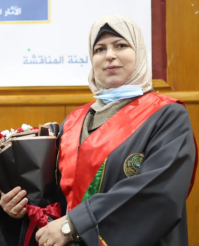
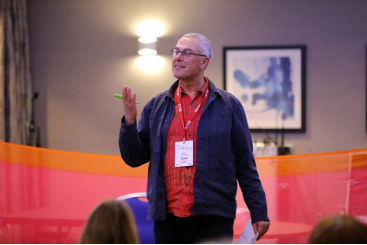
This article is based on a video presentation and an interview with David Heathfield at the Storytelling in Education Global Conference on October 4, 2025.
Luzan Matar
Luzan Matar explains how she uses animated stories to teach children English and respect for others in difficult times
At the beginning of my career, I decided to teach language through different kinds of art – through drawing, theatre activities and music, for example. So art is very important for me and for all my students. At the end of each school year, I collect all their work and invite their parents to school so they can see and feel proud of what their children have accomplished. I always tell my students they should never give up. Whatever happens they should try.
Creating animated stories
One of the techniques I use in my classes is animation, a type of multimedia storytelling that combines writing, drawing, painting, modelling in clay, speaking and photography to make stories come alive. I use it to teach my students not only to speak, read and write English but also to cooperate, respect one another and share ideas together. Here’s how I do it:
- First, I provide my students with a good atmosphere – that is, an environment that can help them imagine. For example, I make the classroom as colourful as I can and cover the walls with pictures. All these things can help students remember and create stories.
- Second, I divide the students into small groups, taking into consideration not only their English levels but also their personal characteristics. For example, I may ask high achievers to help weaker students. I may also choose one student to serve as the group’s speaker.
- Third, I ask the students to listen to a piece of music with their eyes closed and to think about something they like, a story they like, something that happened to them that they like. This step is very important for students since it allows them to express their own opinions.
- Fourth, I give the students a pencil and paper and tell them to write out their story in English. I intervene when necessary, helping the students build up the story and find the English words they need, so that they can retell the story in their own words.
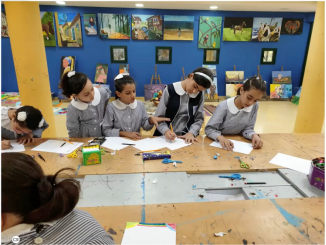
- Fifth, the students draw and paint the setting for the story and model the story’s characters in clay.
- Sixth, we photograph the episodes of the story. Between each shot, the students move the clay characters little by little with their hands.
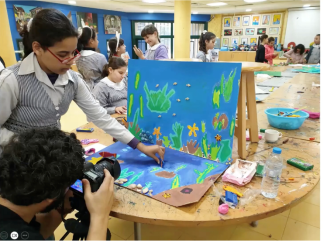
- Seventh, we record the voices of the children telling the story.
- Eighth, we connect the voices with the photographs to produce a video.
Animation in wartime
That’s how we make animated stories with students in Gaza. Or at least, that’s how we did it before the war. Now the situation has completely changed. The schools are closed. I have lost touch with most of my students. We have a shortage of all the basic needs of life – things like food and water. Nonetheless, I decided to make another animation with a small number of students. I believe the students deserve these activities because they like them and learn from them. The activities also help them to relax at this horrible time.
My nine-year-old daughter Menna began by writing a story. She called it “The Bee”. Working with two other students – one ten years old and one five years old – we then animated it. Using the few materials we had, the children drew and painted the pictures for the setting.
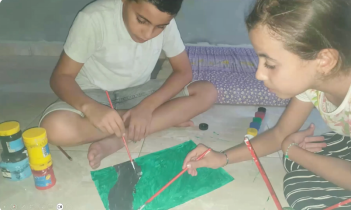
They also made clay models of the characters. I photographed the story’s main episodes with my mobile phone and recorded the children telling the story. The result was a simple animation. Here’s the text with some of the accompanying images:
The Bee
Once upon time, there was a bee. She loved to fly between the flowers. She loved the colors. She loved the smell. She loved the sun.
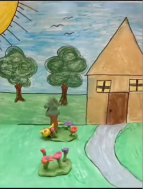
One day, she was flying between the flowers in the garden. She didn’t see the angry man. “What a noisy bee. Come on!”
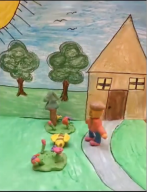
The angry man put a glass on the bee. And the bee cried: “Help! Help! Help me, please!” But nobody cared. She didn’t have food. She didn’t have water. She was tired. She cried again. “Help! Help! Help me please! Help! Help! Help me please!”
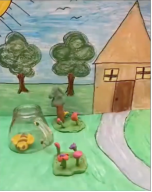
The neighbors heard the bee. They knocked at the door. They knocked again and said, “Free, free, free the bee! Free, free, free the bee! Free, free, free the bee.”
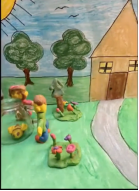
The neighbors opened the door. They broke the glass and the bee was flying again between the flowers.
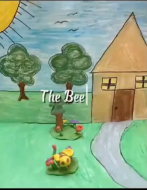
Try it out
Animated storytelling works for us in Gaza. I’m sure it will work for your students too – developing their language skills, unlocking their creative potential and teaching them respect for one another.
David Heathfield adds
I was fortunate to get to know Luzan Matar when she astonished me with her creativity and enthusiasm as a participant on one of my Creative and Engaging Storytelling for Teachers (CrEST) courses in 2022. Since Luzan and Menna created “The Bee” in the spring of 2024, it’s been retold many times in many contexts. Menna herself presented it at the World Storytelling Café in May 2025. I myself have told the story live at many events and many schools and fundraisers over the last 18 months (see photo below). And many other people have told it, too. This simple and brilliant story has almost become an anthem of the project Tell a Child in Gaza’s Tale.
It’s a story which your students can join in with chorally as they chant “Help, help, help me please” and “Free, Free, Free the Bee”.
Your students can also learn and retell the story in Menna’s name and in solidarity with the children of Gaza.
They can make a shoebox theatre with paper puppets – see still images from Menna’s original version and the version made by Evi Karydi’s young learners at ilearn, Athens, Greece here below.
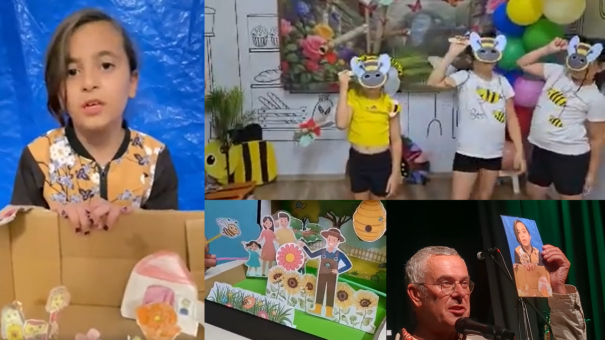
Your young learners can act out the story in costume (see the photo of Georgia Pieri’s students at Intelligent Kids in Cyprus here above).
Or they can make their own animation inspired by this article.
If you make a video, please consider sending it to me so I can share it as part of the voluntary project Tell a Child in Gaza’s Tale https://youtube.com/playlist?list=PLj-mcWeMmSZw63V5abQ4fw3JIITI_S_kS&si=oigZth07R7o8pwrT
This story offers your young learners a chance to talk about what freedom means to them in their daily lives.
Teenage and adult learners of English also appreciate the chance this story gives to open up discussion about the concept of freedom and to research the struggle for freedom of Palestinian people whose homeland is under occupation.
Some of the many videos of “The Bee” being told by Menna Srour and retold by other storytellers worldwide are here for you and your students:
The Bee - animation made by Luzan Matar with Menna aged 10, Tarik and Mira on 3 November 2025 https://youtube.com/shorts/X5U2he6_-BI?si=wGnud9WNe0Y-m3kl
The Bee – the original story with paper puppets created by Menna aged 9 and first shared on 21 April 2024 https://youtu.be/VxeFQ7Wa7aI?si=HpcSBZKmBR_wi4nw
The Bee – told live by Menna at the Young Storytellers event In Friendship with Palestine 18 October 2025 followed by beautiful words from Haneen Khaled Jadallah https://youtu.be/iie8Q6TjyiQ?si=sc1Oghb_dmcCLqFx
The Bee – retold by storyteller and English teacher David Heathfield 29 May 2024 https://youtu.be/vhYwEhjGcpM?si=kU-PjAoN3IFhxNn0
The Bee – retold with paper puppets by young learners of English in Greece 12 July 2024 https://youtu.be/26k6rNi0lCg?si=8YzRy80upvNCKNqj
The Bee – retold in Spanish by storyteller Rebeca Robles in Mexico 15 October 2024 https://youtu.be/tL9kWGbRcPQ?si=-Seq5nDwhtJSoy4T
The Bee – retold by UK storyteller and English teacher Susan Piper 18 December 2024 https://youtube.com/shorts/cwJrBsQXwUk?si=BAnGSMmxjGyH7WPL
The Bee – retold bilingually by Scottish Storyteller Jackie Ross in Doric (a dialect of Scots) and David Heathfield in English 18 April 2025 https://youtu.be/eNftTP1Rp5E?si=aRaCYaUMHWSMvKxu
The Bee – retold by UK storyteller Michael O’Leary 6 June 2025 https://youtube.com/shorts/1UMdnW7TMUY?si=hELP0Cxx1vlTf8ll
The Bee – retold live by David Heathfield together with the audience at Concert for Gaza, Topsham, UK 7 September 2025 https://youtu.be/iO0VEyEVcOg?si=gkbDL0oK35xybTFO
The Bee – retold by Evita Storyteller 10 November 2025 https://youtu.be/z3FoyGHD8r0?si=stuSxgOBEszKqvq-
The Bee – retold by storyteller Veena Hasan in India 21 November 2025 https://youtube.com/shorts/3BttmFRuD7k?si=ei-NCCfAESfESBp-
Find out more
Further information about the project Tell a Child of Gaza’s Tale is available online in previous issues of Humanising Language Teaching
https://www.hltmag.co.uk/feb24/tell-a-child-in-gazas-tale
https://www.hltmag.co.uk/aug25/tell-our-stories-to-the-world
https://www.hltmag.co.uk/dec25/telling-their-stories-to-the-world
Please check the Pilgrims in Segovia Teacher Training courses 2026 at Pilgrims website
Every Child is an Artist: Visual Representation and Learner Generated Visuals in ELT
Chrysa Papalazarou, GreeceFree the Bee – Animated Storytelling with Young Learners in Gaza
Luzan Matar, Palestine;David Heathfield, UKLearning from Freedom
Daniel Costa, InternationalBlogging as a Tool to Develop Written Expression
Gretel Victoria Calderón Ruiz, CubaTeaching Adults in TTC Courses
Narjes Nasrpour, Iran